Blog
Afro-descendant Guardians and Climate Finance: What Will it Take to Fund their Land Rights?
Rights and Resources Initiative

Afro-descendant Peoples are not simply communities living in the forest; they are among the most effective forest guardians on the planet. Yet their territories in Latin America and the Caribbean remain almost entirely excluded from climate finance. The Plan to Accelerate Solutions (PAS) has set out to change this.

27 .07. 2026  
4 minutes read
SHARE

In the Brazilian Amazon, Quilombola communities have lost only 1.4 percent of their forests over the last two decades. Compare this to the 25 percent loss on neighboring private lands during the same period. These are not simply communities living in the forest; Afro-descendant Peoples are among the most effective forest guardians on the planet.

Yet, in Latin America and the Caribbean, their territories remain almost entirely excluded from climate finance.

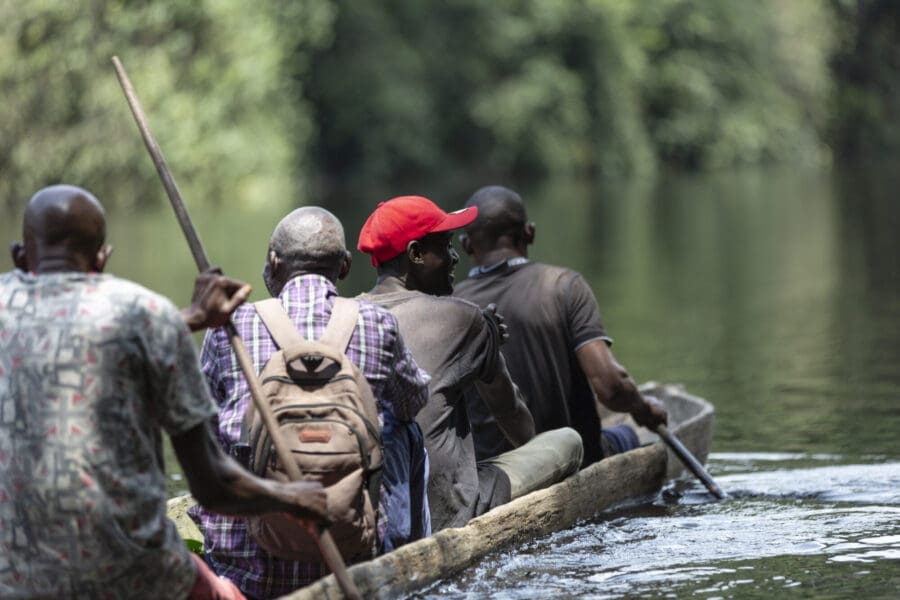
Photo by Darwin Torres, Proceso de Comunidades Negras (PCN). Colombia, 2023.

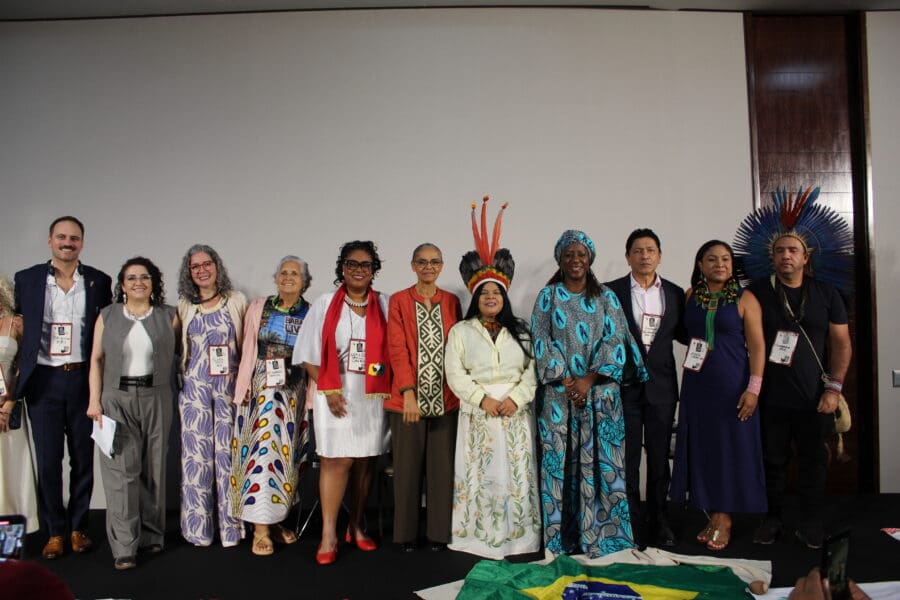
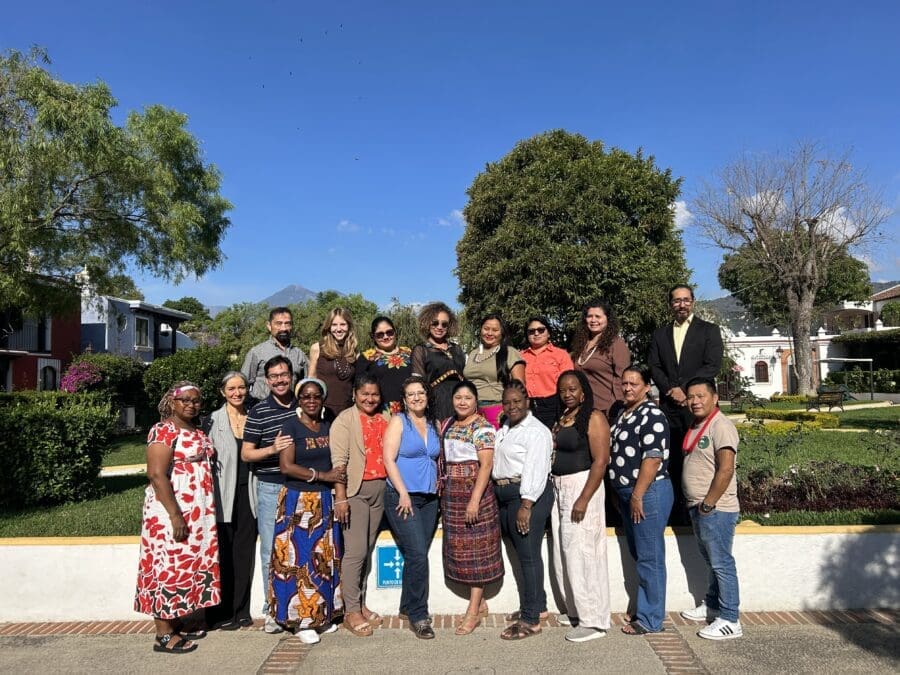
This contradiction was the central theme of a high-level roundtable convened by the Rights and Resources Initiative (RRI) in Brasília, Brazil, on May 27, 2026, during the Global Summit on Collective Livelihoods & Conservation. The meeting brought together bilateral donors, philanthropic foundations, multilateral partners, public authorities, and civil society to explore how to bridge a gap that represents both a failure of climate action and a failure of racial justice.

What is the Afro-descendant PAS, and why does it matter? 

The Plan to Accelerate Solutions (PAS) is part of the COP30 Action Agenda, designed to translate the outcomes of the Global Stocktake into concrete results. Launched in Belém in 2025, PAS serves as an acceleration platform, connecting governments, civil society, multilateral banks, and donors around shared territorial goals. Launched by RRI and the governments of Brazil and Colombia, PAS is a regional platform for cooperation and financing focused on the recognition of territorial rights, community-based environmental management, and institutional strengthening of Afro-descendant Peoples throughout the region.

RRI coalition members pose for a photo alongside representatives from the governments of Brazil and Colombia during the launch of the PAS for People of African Descent at COP30 in Belém, Brazil. Credits: Lucas Wasson, RRI.

The platform is based on a simple and urgent premise: Afro-descendant Peoples’ territories are essential for achieving results on climate and biodiversity, yet they have historically been systematically excluded from the mechanisms designed to protect both. PAS exists to correct this systemic failure.

RRI serves as the technical secretariat and host of the platform, facilitating implementation, monitoring progress, reporting results, and supporting Brazil and Colombia in building the regional partnerships necessary for PAS to function.

The numbers behind the agenda

The experiences of Colombia and Brazil illustrate both the scale of what is possible and the road that still lies ahead.

In the more than 33 years since Law 70 of 1993 was enacted, Colombia has granted title to more than 5.7 million hectares of collective land for Afro-descendant communities, protecting 341 collective land titles and securing land for nearly 95,000 families. Now, the Petro-Márquez administration has committed to increasing that total to 8 million hectares, with 487 additional applications currently pending.

Colombia’s Ambassador to Brazil, Alfredo Saade, presents the Colombian government’s progress and commitments regarding land tenure for Afro-descendant Peoples. Credits: Lucas Wasson, RRI.

Brazil presents a similar picture. More than 7,600 Quilombola communities are recognized throughout the country, with more than 4 million hectares already mapped. However, the legal titling process has lagged far behind the communities’ actual presence on the land and their management of it.

PAS aims to change this trajectory. By 2030, the platform has committed to:

  • 1 million hectares with formal land regularization for Afro-descendant communities
  • 10 million hectares with strengthened community-based territorial and environmental management
  • At least 10 participating countries in Latin America and the Caribbean
  • $35 million raised, with at least 85 percent going directly to community organizations

Brazil and Colombia have made landmark commitments ($5 million and $3 million, respectively), and RRI has committed $1.5 million through its CLARIFI funding mechanism. The remaining $25.5 million represents the shortfall that the roundtable set out to help close.

What the roundtable was about

The meeting in Brasília was a working session, an opportunity for donors to understand the architecture of PAS, delve deeper into implementation and accountability, and explore how their own strategies could align with the platform’s regional objectives.

Three avenues for financial participation were proposed: (i) direct bilateral agreements between donor governments and Brazil or Colombia; (ii) channeling resources through CLARIFI for the direct awarding of grants to Afro-descendant organizations; or (iii) a decentralized model in which donors implement their own programs and report results to the PAS Committee.

Katia Penha and José Luis Rengifo speak during the Donors Roundtable on behalf of CONAQ, PCN, and CITAFRO. Credits: Lucas Wasson, RRI.

What united all participants in the discussion was the recognition that the platform’s credibility depends, above all, on one fundamental issue: that resources actually reach the communities. For this reason, the minimum threshold of 85 percent for direct funding to community organizations was a central principle.

A platform created for this moment

The post-COP30 period presents a unique opportunity marked by aligned political will. Brazil and Colombia are jointly leading a genuine government commitment. In Colombia, the initiative has the direct backing of Vice President Francia Márquez, who is a long-standing advocate for the rights of Afro-descendant Peoples and territorial rights. The technical infrastructure—ranging from a GIS-based dashboard to the progress reporting framework of the Intergovernmental Commitment on Land Tenure—is being built to ensure that results are verifiable and comparable across countries.

What is needed now is a financial architecture that matches this ambition.

Carla Cardenas, Director of the Latin America Program at RRI, presents during the Donors’ Roundtable. Credits: Lucas Wasson, RRI.

Afro-descendant communities across the Americas aren’t waiting to be recognized as climate leaders, they already are. The question that the roundtable in Brasília clearly posed to the donor community is one that the climate finance system has taken far too long to answer:

What will it take to truly fund them?


Interested in receiving notifications about new blog posts? Subscribe to The Land Writes Blog now to get new posts delivered right to your inbox.

Subscribe to this blog
To receive new articles directly in your inbox
Subscribe Now!
Subscribe to the RRI mailing list
to receive new articles directly in your inbox
Subscribe Now!
Subscribe to the Gender Justice Digest
to receive new articles directly in your inbox
Subscribe Now!