

The Women in Global South Alliance (WiGSA) is a cross-continental solidarity network of Indigenous, Afro-descendant, and local community women from Africa, Asia, and Latin America. The following principles outline the values that guide WiGSA in its internal relationships, decision-making, planning, and development of joint advocacy. These principles also support WiGSA’s positioning when crafting declarations and defining representation of the network in international and national spaces, and in dialogues with governments, allies, and donors.
Companies may face operational, legal, and financial risks when operating or investing in locations where land rights are disputed or where tenure rights are not understood and respected. Perhaps more importantly, community access and rights to livelihoods and economic security may be negatively impacted by such investments. This paper illustrates how selected companies are implementing commitments to international best practices on land rights. Given that the companies referenced in this paper are in the process of developing and improving ways to address land tenure rights, the cases ought to be viewed as examples of emerging company experiences, which can contribute to establishing best practices.
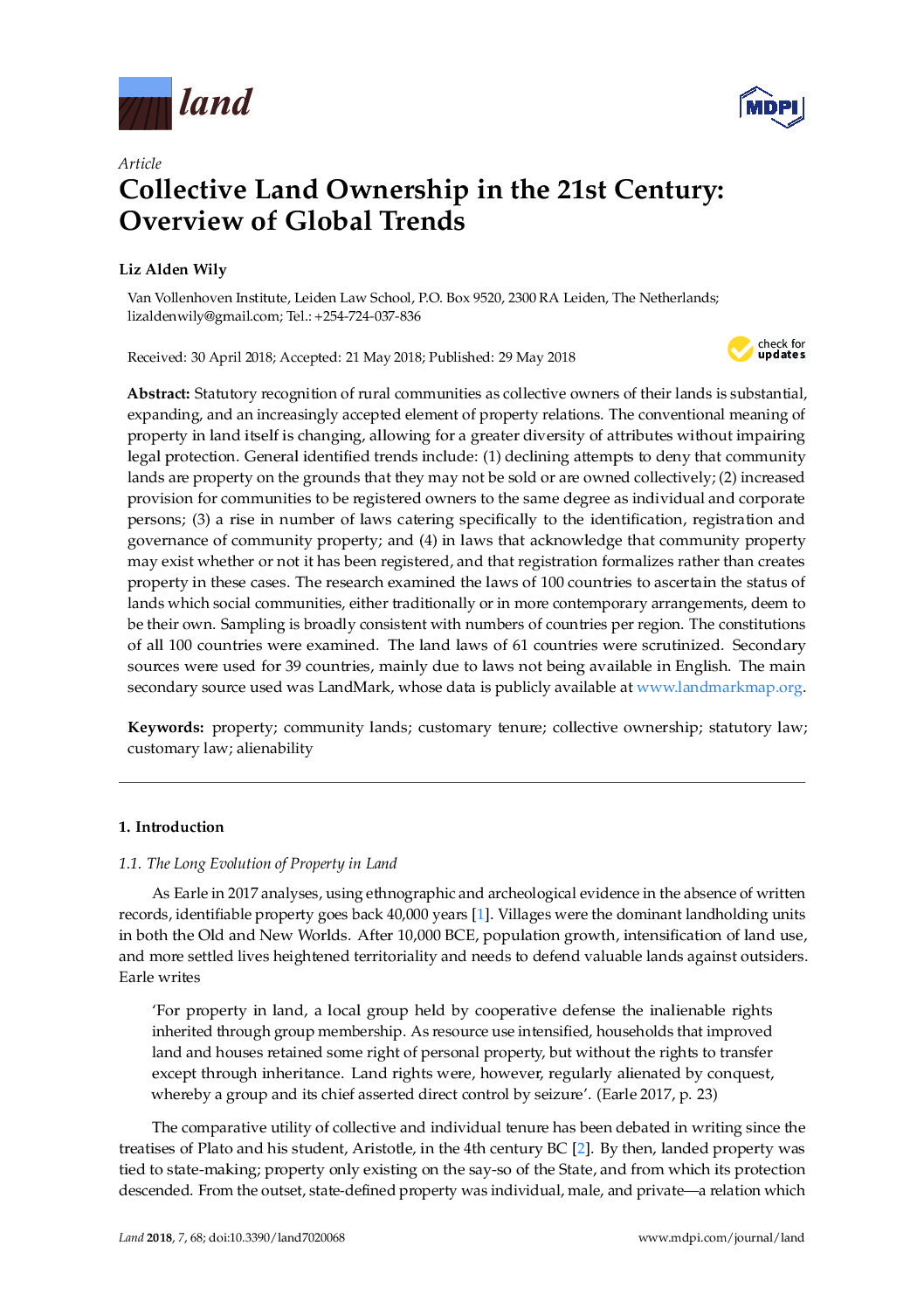
The research examined the laws of 100 countries to ascertain the status of lands which social communities, either traditionally or in more contemporary arrangements, deem to be their own.
The following reports were produced in 2016-17 as part of the Community Forest Rights Learning & Advocacy Process, with the support of the Rights and Resources Initiative and Oxfam India.
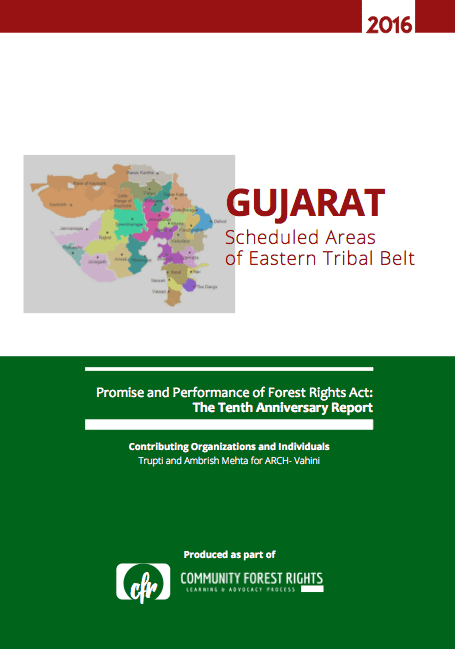
This study gives an approximate estimate of the potential forest areas that can be covered under the FRA in Gujarat. The idea is to compare and assess the actual status of the implementation with regards to the potential. This study also provides an overview of the implementation of the Act, together with highlights of both positive and negative aspects of the process and outcomes.
This study makes a preliminary assessment of the potential forest area over which rights can be recognized in Telangana under the FRA and compares it with the actual performance. The estimate provided offers a baseline for informing implementation, planning, and setting targets for rights recognition under the FRA.