

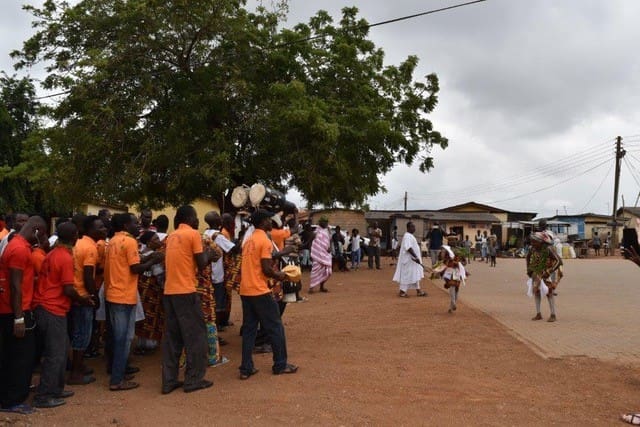
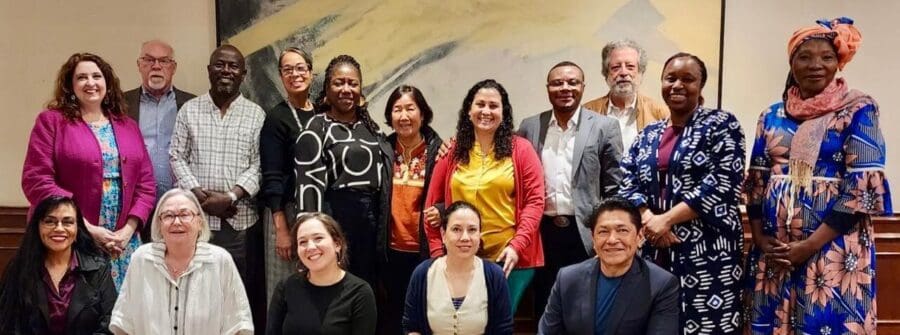
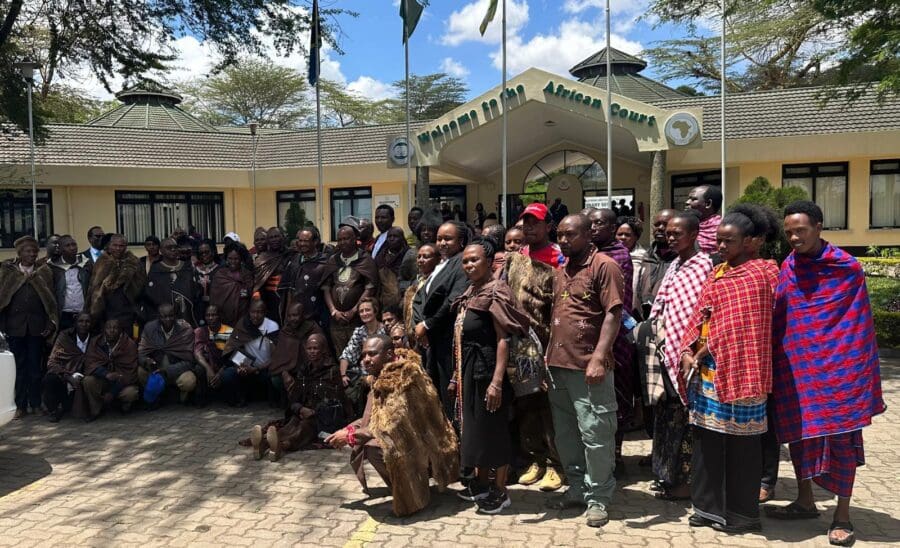
For many governments, upholding commitments to demarcate and recognize community lands is both vitally important and no small task—particularly in environments where land commissions face constrained funding, political or economic roadblocks, or other obstacles. After a number of representatives from land commissions in Africa voiced a desire to exchange experiences and learning with their colleagues from across the continent, we joined forces with the African Union’s Land Policy Initiative to hold a three-day workshop in Accra, Ghana.

RECENT ARTICLES
Engaging with indigenous people benefits business, environment – U.N. expert
Governments too often sidestep indigenous people when approving new infrastructure projects on their land, ignoring the potential for sustainable economic growth and environmentally-friendly development, a U.N. expert said on Tuesday.
‘Indigenous peoples are the best guardians of world’s biodiversity’
Interview with UN Special Rapporteur Victoria Tauli-Corpuz to mark the International Day of the World’s Indigenous Peoples
India’s tribals at loggerheads with new tree-planting policy, say campaigners
Millions of tribal people in India are being denied their rights to forest land and resources and forced from their ancestral settlements due to a recently enacted law promoting an increase in tree cover, an indigenous rights group said on Wednesday.
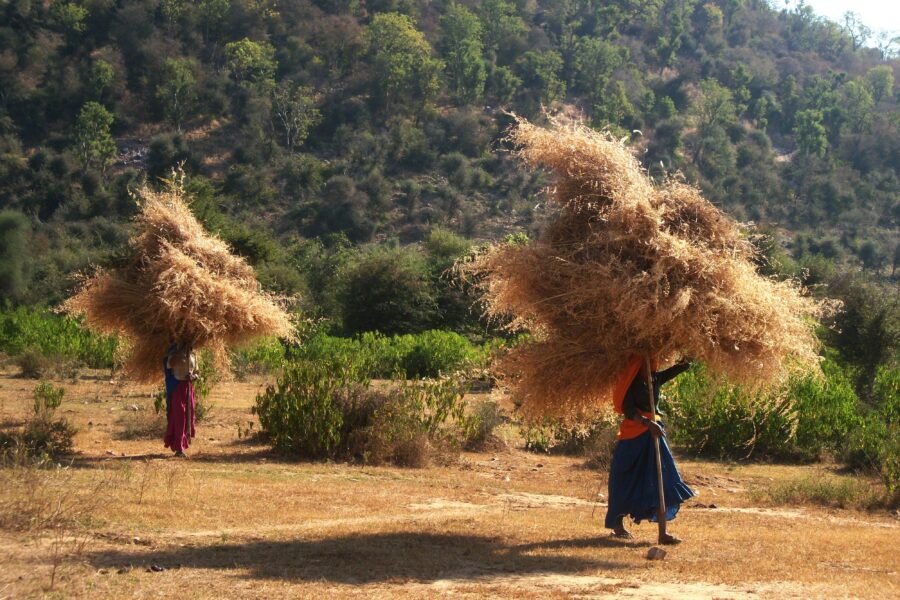
Global rights, local struggles: barriers to women’s participation in community land decision-making
Despite growing international commitments to gender equity, there remains a persistent gender gap in women’s political representation, particularly in poor rural and indigenous communities.
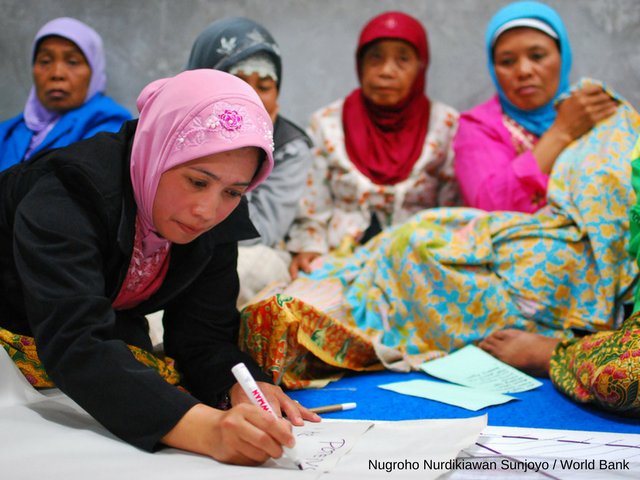
To succeed, REDD+ efforts must address women’s rights within communities
REDD+ initiatives are not sufficiently incorporating the conservation knowledge of Indigenous Peoples and local communities—particularly that of women.

Record-breaking mobilization calls for Brazil to end its attack on Indigenous Peoples’ and Afro-descendant land rights
In Brazil, indigenous and Afro-descendant communities face unprecedented threats to their hard-won territorial and constitutional rights.

Q&A: RRI Fellow Madhu Sarin on strengthening women’s land rights in India
RRI Fellow Madhu Sarin has been working on forest tenure reform in India for the last 15 years. In a conversation with RRI, Madhu shares her perspective on what it takes to strengthen women’s land and community forest rights in practice in India, how the country’s Forest Rights Act helped secure women’s land rights, and more.
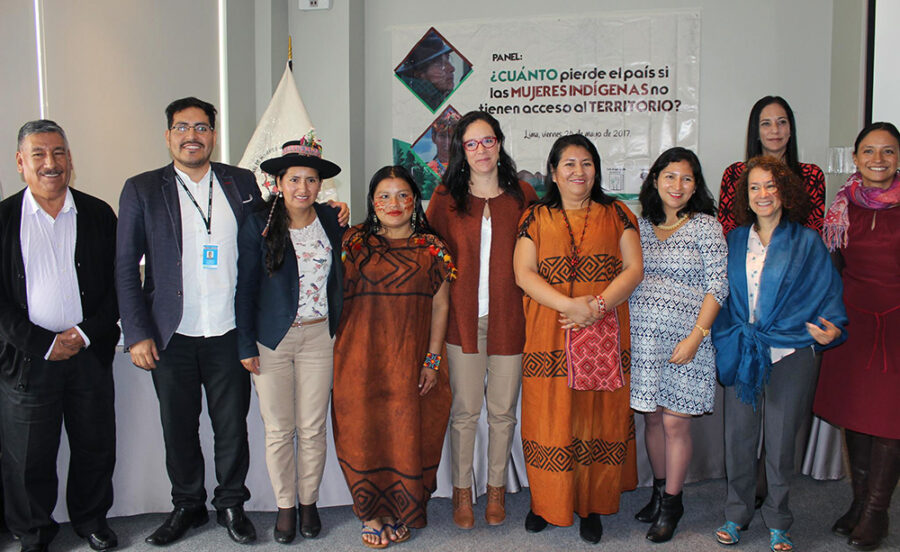
Peru: What Does the Country Lose if Indigenous Women Lack Access to Land?
At a panel event in Lima, Peru, indigenous women advocated for stronger legal protections for indigenous women’s rights to govern their lands and resources.

The Effects of Large-scale Land Acquisitions on Women
Over the last two decades, companies in search of vast tracts of available land for agriculture, mining, and other uses have increasingly turned to rural Asia and Africa. From 2008 to 2010, between 51 and 63 million hectares of land were acquired on the African continent through such large-scale land acquisitions (LSLAs). And while the repercussions of LSLAs affect entire communities, women suffer the most.
Unequal rights for indigenous, rural women endanger forest lands – researchers
Inadequate rights for indigenous and rural women are jeopardizing forests and common lands across the globe as demand for land and resources grows.
The Most Read Stories

Subscribe to the Gender Justice Digest
to receive new articles directly in your inbox
Subscribe Now!