

A software tool to help poor urban Cambodians facing eviction get secure land titles can also be used in rural areas where tens of thousands of people are snared in conflicts over land, according to the rights group that designed the technology.

RECENT ARTICLES
International Facility to Finance Community Land and Forest Tenure
Land stakeholders have stepped up resource mobilization efforts to strengthen land rights and tenure governance globally, through the launch of the International Land and Forest Tenure Facility (the Tenure Facility) and preparations for the ‘Land 2030 Global Initiative’.
A land rights storm brewing in Barbuda?
Millions have learned of the existence of the small island of Barbuda (161 sq. km), through the havoc that Hurricane Irma wreaked on the island, destroying most buildings, roads, water, and power installations. What they may not know is that the less than 2,000 Barbudans collectively own their island; this ownership is under threat, which has been heightened by Hurricane Irma.
Stepping Forward to Lead on Indigenous Rights
When nine women farmers from the Kendeng community in Central Java encased their feet in cement blocks last year, many indigenous advocates understood how that felt. Dressed in their traditional clothing, these women protested outside the State Palace in Jakarta to block a proposed cement plant that would pollute the rivers flowing through their villages. Their livelihoods as farmers were under threat, as was their cultural heritage.
Q&A: Indigenous peoples in the driver’s seat for a sustainable future
Over half the world’s land is lived on and managed using customary and traditional systems. Yet indigenous peoples and local communities have formal, legal ownership of just 10 percent of land globally. Insecure land rights can often lead to protracted conflicts with governments and companies, climate change — when land is not protected from deforestation — and human rights abuses.
Giving Indigenous People Land Rights is a No-Brainer for Fighting Climate Change
Millions of people live in the world’s remaining forests, and evidence is mounting that indigenous communities are not only the best managers of the land, but are indispensable allies in the climate fight.
$100 million dollar fund launched to secure indigenous land rights
A new $100 million initiative will help indigenous peoples and local communities in rural areas secure rights to their traditional lands.
Giving Visibility – and Land Rights – to the Indigenous
“Include us, so that we can protect our lands for our children and protect the planet’s biodiversity for all the world’s children,” said by Victoria Tauli-Corpuz, UN Special Rapporteur on the Rights of Indigenous Peoples during the launch. Recognising the land rights of native and traditional peoples is a low-cost solution toward achieving the world’s development, environment and climate agendas.
To address the climate crisis, we must address inequality
For most people, the mega-hurricanes we have witnessed – along with their devastating consequences – have put an exclamation point on the urgency of climate change. But an even bigger exclamation point came in the form of a new scientific study showing how the carbon released by tropical deforestation and degradation has been underestimated.
Factbox: What are indigenous and community lands?
Here are some of the terms frequently used in connection with indigenous and community lands.
Justice, not just money, should drive fairer land rights: top U.S. philanthropist
A drive for a fairer world has to be at the heart of the fight for indigenous and communal land rights to ensure a long-term solution rather than just throwing money at the problem, the head of one of the largest U.S. philanthropic foundations said.
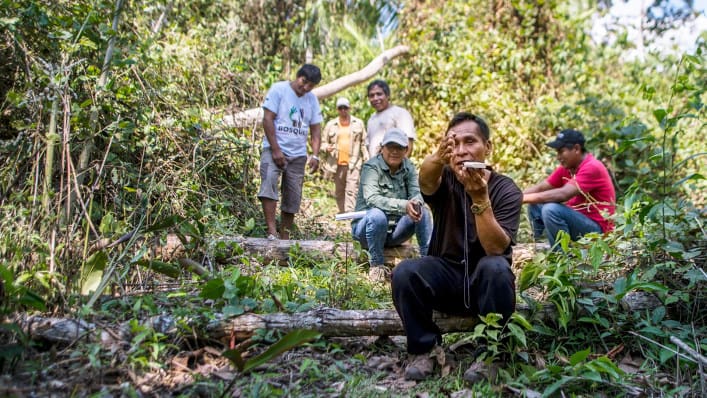
World Bank supports the establishment of the International Land and Forest Tenure Facility
On behalf of The World Bank Group, I congratulate the Government of Sweden and the organizers of this event on the launch of the Tenure Facility. Securing indigenous, community, and women’s land rights is fundamental to the Bank’s mission to end extreme poverty and promote shared prosperity.
The Most Read Stories

Subscribe to the Gender Justice Digest
to receive new articles directly in your inbox
Subscribe Now!