

Indigenous peoples’ and local communities’ lands cover more than half the global land mass, yet governments are not ensuring their rights and protections, according to Washington D.C.-based advocacy group Rights and Resources Initiative.

RECENT ARTICLES
AIIB Summit: Will the Bank Be More Hands-On with Funding Environmental Projects?
Along the route from Mumbai’s international airport in Santa Cruz to the high-profile business district of Nariman Point, is a series of billboards featuring a significantly larger-than-life image of Prime Minister Narendra Modi welcoming investors to the third annual general meeting of the Asian Infrastructure Investment Bank (AIIB).
Strengthen local forests for best climate solutions
In recent research that analysed contribution of local communities’ contribution to climate change mitigation by looking at carbon storage in collective lands, it was established that communities that claim and own their collective lands have so far sequestered at least 54,546 million tonnes of carbon equivalent — roughly four times the world’s annual emissions. The study, carried out by Rights and Resources Initiative, Woods Hole Research Centre and World Resources Institute, calls for recognition of the world’s indigenous and local communities in climate stabilisation and carbon sequestration.
Minor forest produce, major returns
A report of the Rights and Resources Initiative (2015) suggests that if the FRA is implemented properly, it could lead to the recognition of the rights of at least 150 million forest-dwelling people over 40 million hectares of forestland in more than 1,70,000 villages.

A new era of land struggle on the horizon—holding governments to their commitments to collective tenure
It now seems possible that by century-end the largest sector of acknowledged property worldwide will be community-owned and governed.

To protect the Congolese peatlands, protect local land rights
Recent research by the Rights and Resources Initiative demonstrated that the DRC’s first REDD+ initiatives in Mai-Ndombe province do not adequately respect the rights of local peoples. What is more, they are actually failing to protect their forests.
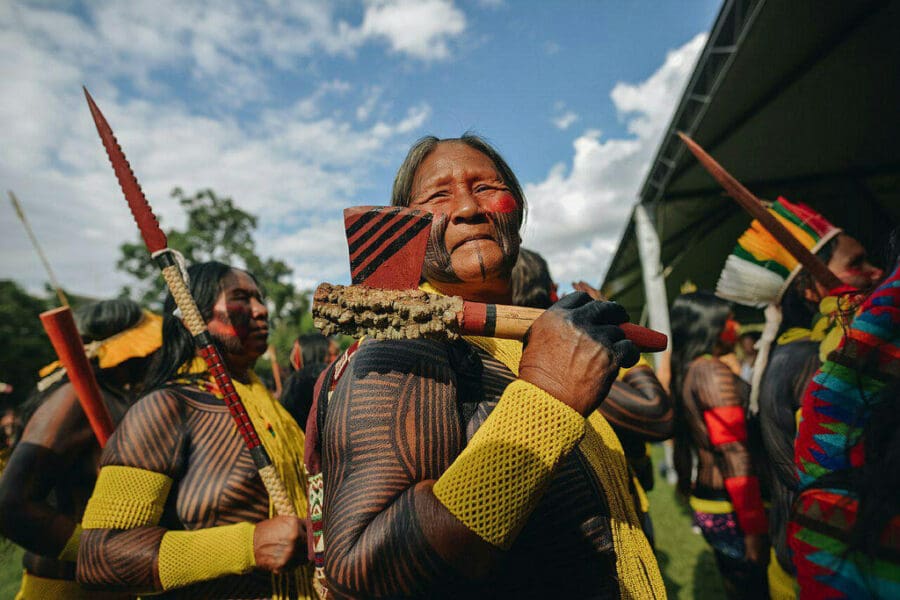
3,000 join Terra Livre encampment in Brazil to protest attacks on indigenous rights
The 15th Free Land Camp (Terra Livre, or ATL for its Portuguese acronym) brought 3,000 Indigenous Peoples and their allies together from all regions of the country at a massive encampment in Brasilia to call for justice for indigenous communities. Participants used the gathering—one of the largest ever—to create and present a unified political agenda before the Brazilian government.
Liberia: Civil Society, Communities to Reduce Deforestation in Oil Palm Concessions
Civil society organizations and communities affected by oil palm concessions across Liberia have grouped themselves in addressing urgent issues in the oil palm sector, demanding more access to mechanisms that can make concessionaires more accountable in line with laws and regulations.
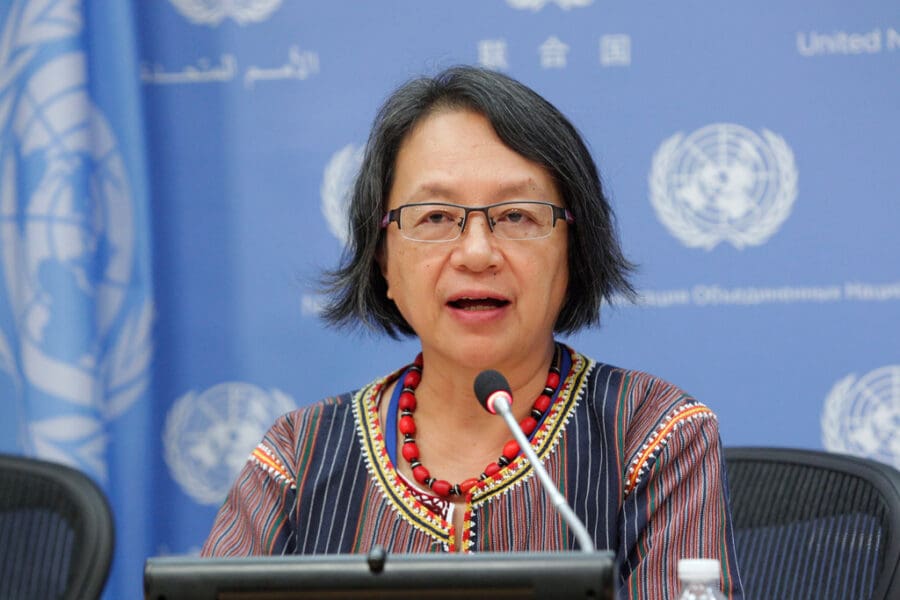
UN Permanent Forum spotlights Indigenous Peoples’ contributions to global goals
The theme of this year’s UN Permanent Forum on Indigenous Issues was “Indigenous Peoples’ collective rights to lands, territories, and resources.” Indigenous leaders from across the globe noted the crucial role that secure rights play in their lives and livelihoods, and in the advancement of sustainable development and climate change mitigation.
Where women lead on climate change
Pressures from climate change have worsened poverty, food insecurity, human trafficking, and child marriage, activists argue. For a long time, says Ms. Bandiaky-Badji, people have focused on rural and indigenous women “as victims.”
NGOs fear UN REDD+ scheme to combat deforestation will lead to land grabs
Land rights is emerging as a big issue in the UN’s REDD+ programme to reduce deforestation, with concern focused on a tract of 9.8 million forested hectares in the Mai-Ndombe province in the Democratic Republic of the Congo (DRC).
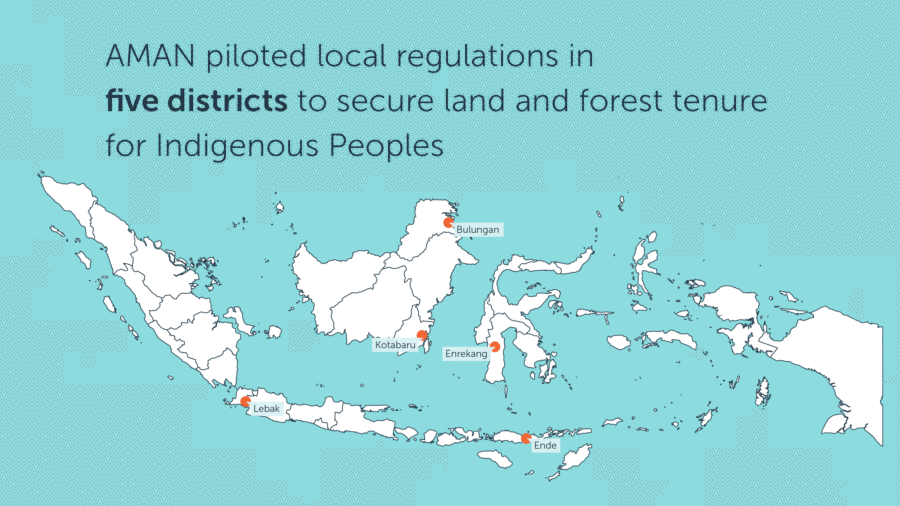
Igniting a movement: Using local legislation, AMAN advanced tenure security over more than 1.5 million hectares of Indigenous Peoples’ land and forest in Indonesia
In just 29 months, the Alliance of Indigenous Peoples of the Archipelago, or AMAN, advanced community tenure security over 1.5 million hectares of land.
The Most Read Stories
Subscribe to the Gender Justice Digest
to receive new articles directly in your inbox
Subscribe Now!