

Indigenous peoples and local communities legally own only about 15 percent of forests worldwide, according to a 2018 analysis by the Rights and Resources Initiative, a global land rights coalition.

RECENT ARTICLES
Land Conservation: A Risky Business
Launched by the Rights and Resources Initiative (RRI), the International Land and Forest Tenure Facility is the first and only multi-stakeholder financial mechanism focused on securing land and forest rights for indigenous peoples and local communities. It provides grants to indigenous organisations to help scale up implementation of land and forest tenure reform policies as well as to map and register their lands.
If you want to protect the forests, you have to protect the people
“Those new conservation and climate bodies need to incorporate indigenous peoples. $1 billion was given to preserve 30% by 2030, however we would have achieved this 30% if we simply implemented indigenous rights across 7 countries,” said Andy White, Coordinator of Rights and Resources Initiatives (RRI).

“The second wave of decolonization” – A conversation with Andy White
The RRI is a global network advocating for the land and forest rights of Indigenous peoples and local communities. As the RRI’s coordinator, Andy White travels the world, meeting with Indigenous and community leaders, governments and civil society organizations to discuss how local communities’ rights to the forest can be advanced. Here, as part of an ongoing review of community rights to forested lands and key conditions for success led by Tropenbos International, he talks about recent progress and challenges and the role that civil society organizations can play to help people claim their rights as a step toward locally-led sustainable development.
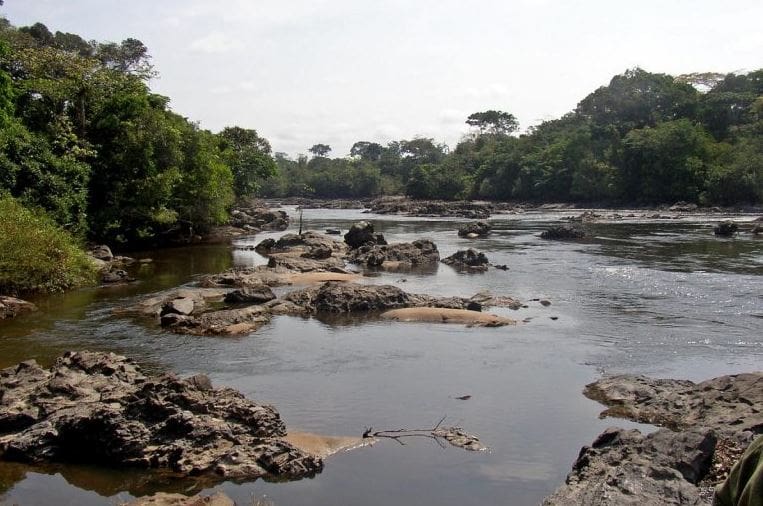
Farming communities abused at troubled DRC mega-farm, campaigners say
“They started the project by taking away communities’ land without their consent, using intimidation and all kinds of misplaced government power to evict them from their own customary land,” said Kipalu, who now works for the Rights and Resources Initiative in Washington, D.C.
Political parties told to promise community-based land, forest governance in manifestos
Referring to the estimates of Rights and Resources Initiative (RRI) CSD says the actual potential forest land going to be recognized under FRA, 2006 would be more than 85.6 million acres (excluding five north-eastern states and J&K) and more than 200 million Scheduled Tribes (STs) and Other Traditional Forest Dwellers (OTFDs) in over 170,000 villages in the country are estimated to get IFR rights under FRA.

Remembering our colleague Peter deMarsh
The Rights and Resources Initiative Coalition mourns the loss of one of our planet’s brightest, most dedicated champions.
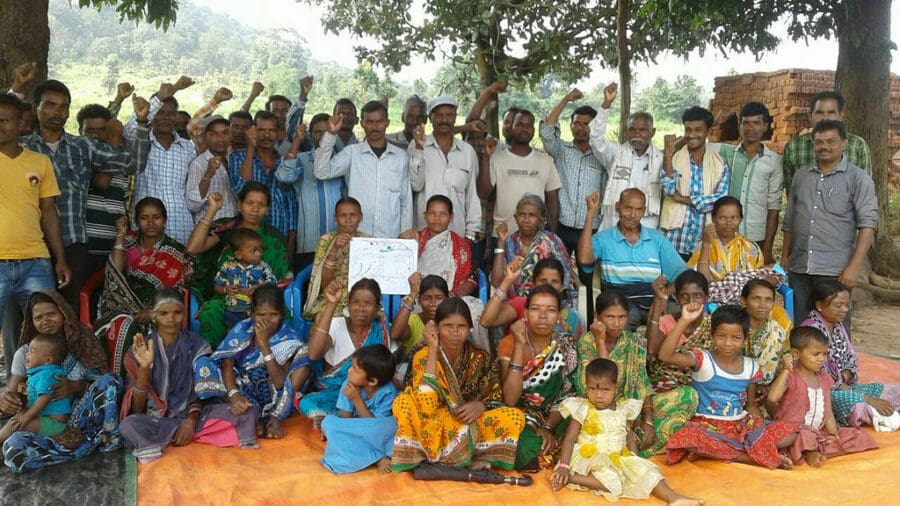
Conservationists speak out against India Supreme Court’s eviction order
”We do not regard this order as pro-conservation. On the contrary, it is a real setback for conservation in India.”
Thai community forest bill won’t benefit all, campaigners say
A new community forest bill that aims to give Thai villagers more say in managing natural resources is too limited in its scope and risks further marginalising those living outside areas covered by the act, land campaigners said on Thursday.

Progress “too slow, too small”: Why Indonesia’s largest indigenous group will not endorse Jokowi for re-election
In 2014, President Joko Widodo had secured a voter bloc of 12 million Indigenous Peoples. But five years later, as he is seeking re-election in April’s presidential elections against the same political opponent, Jokowi has failed to secure the endorsement of the Indigenous Peoples Alliance of the Archipelago (AMAN)—Indonesia’s largest indigenous network—whose voting bloc has doubled in size since 2014.
The biggest rainforest news stories in 2018
Recognition of the role local and indigenous communities have in stewarding forests continued to grow in 2018. More reports and studies argued that securing indigenous peoples’ land rights is one of the most cost-effective mechanisms for protecting forests and mitigating climate change. Accordingly, philanthropic attention and dollars shifted toward such efforts, including a pledge by group of 17 philanthropic foundations at the Global Climate Action Summit to support recognition of indigenous peoples’ and traditional communities’ collective land rights and resource management as part of their land-based climate change mitigation programs. A study co-authored by UN Special Rapporteur on the rights of indigenous peoples and the Rights and Resources Initiative (RRI) even put a dollar figure on the labor and cash indigenous peoples invest in forest conservation efforts, estimating the annual contributions of such “Forest Guardians” at $1.7 billion.

The global community should address environmental issues as human rights issues
Overall, these approaches, which are framed as human rights issues alongside environmental issues, have a drastic impact on the globe’s future. In September, The Rights and Resources Initiative (RRI) published a study that found that “legally recognized indigenous and community forests tend to store more carbon and experience lower rates of deforestation than other forests.” RRI’s findings reinforce the view that locally managed forests, whether it is indigenous lands or communal lands, help connect the health of nature with the health of people and ultimately the health of our collective future.
The Most Read Stories
Subscribe to the Gender Justice Digest
to receive new articles directly in your inbox
Subscribe Now!