
This report is informed by the imperative to prevent the collapse of biodiversity while respecting the tenure and human rights of Indigenous Peoples (IPs), local…
This brief discusses legislative developments during COVID-19 in India, Indonesia, and the Philippines that undermine sustainable human-environment interactions and broader enjoyment of Indigenous and community rights over their customary territories.
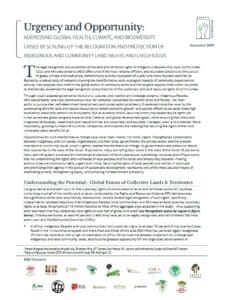
The legal recognition and protection of the land and territorial rights of Indigenous Peoples (IPs), local communities (LCs), and Afro-descendants (ADs) offers one of the…
Identifying Opportunities to Invest in Securing Collective Tenure Rights in the Forest Areas of Low- and Middle-Income Countries
The global urgency to both document and secure Indigenous Peoples’, local communities’, and Afro-descendants’ customary rights cannot be overestimated. Research shows that legally recognized community…
The contributions of the forest, trees outside forests, and agroforestry sector (FTA) are crucial for achieving the United Nation’s (UN) 2030 Agenda for Sustainable Development…