
Over the course of 2022, one hundred leaders of grassroots networks in 22 countries—men, women, and youth among Indigenous Peoples, local communities, and Afro-descendant Peoples—were interviewed about their hopes, dreams, and fears for the future.
This report argues that to effectively and equitably mitigate climate change and biodiversity loss, new conservation modalities are needed to end exclusionary approaches, embrace human rights-based strategies, and advance the recognition of the land, forest, water, and territorial rights of Indigenous Peoples and local communities who customarily own over half of the world’s lands.
This research provides a timely reminder of the global significance of community-held lands and territories; their importance for the protection, restoration, and sustainable use of tropical forestlands across the world; and the critical gaps in the international development architecture that have so far undermined progress towards the legal recognition of such lands and territories.
After more than a decade of engaging with Indigenous Peoples and local communities through REDD+ readiness and implementation efforts, participant countries of the Forest Carbon Partnership Facility (FCPF) have gained insights into what is needed to strengthen communal and collective land forest tenure. This comprehensive report provides an assessment of countries affiliated with the FCPF's Carbon Fund and lays out cross-cutting challenges as well as opportunities to advance Indigenous Peoples' and local communities' land rights.
A growing body of evidence suggests that recognition of the collective tenure rights of Indigenous Peoples, local communities, and Afro-descendants is a powerful and cost-effective strategy for addressing the climate and biodiversity crises. In spite of this, international funding for rights recognition pales in comparison to donor mobilization around alternative solutions to these crises.
This brief discusses legislative developments during COVID-19 in India, Indonesia, and the Philippines that undermine sustainable human-environment interactions and broader enjoyment of Indigenous and community rights over their customary territories.
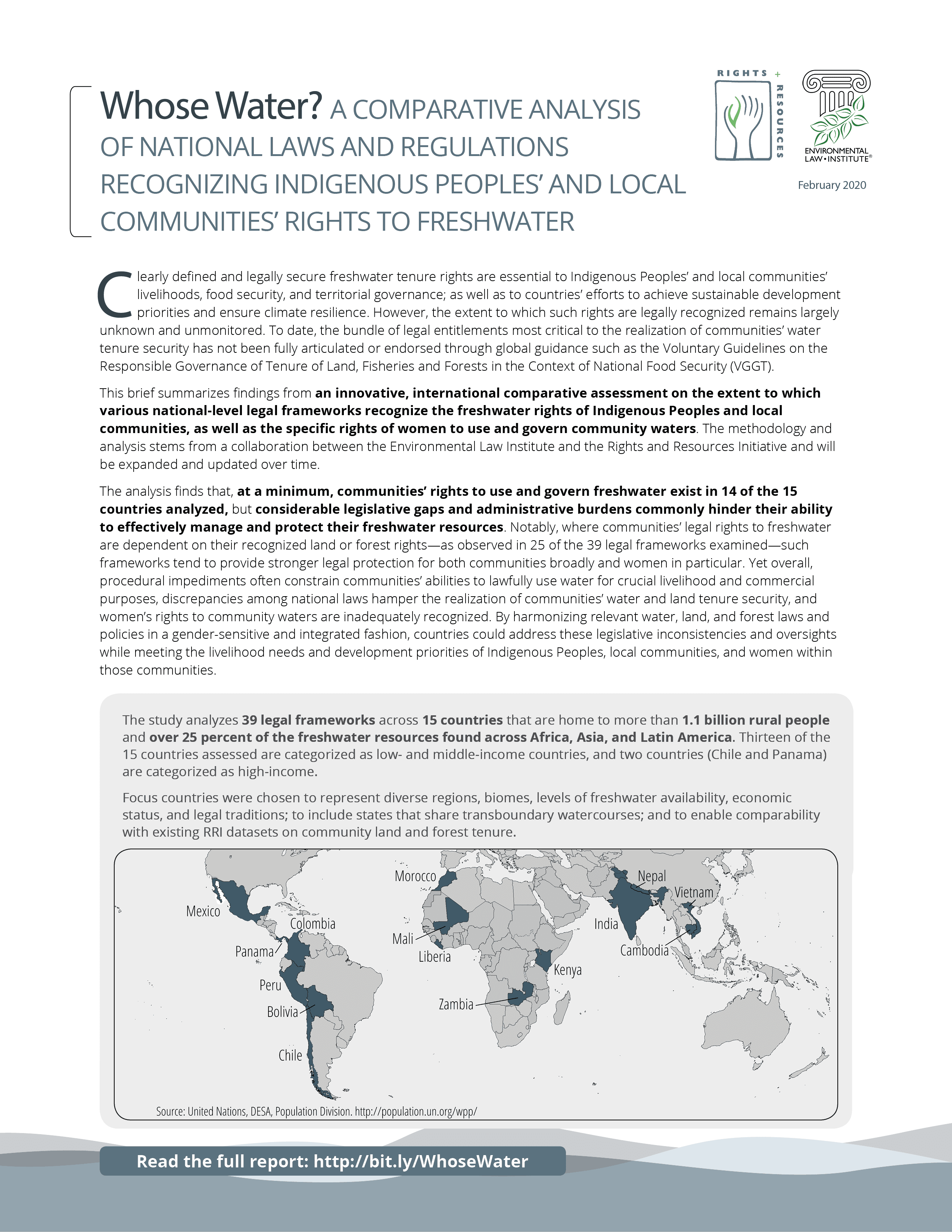
This report presents an innovative, international comparative assessment on the extent to which various national-level legal frameworks recognize the freshwater tenure rights of Indigenous Peoples, Afro-descendants, and local communities, as well as the specific rights of women to use and govern community waters.

In India, conflicts over land can have deep and far-reaching implications for the well-being, development, and identities of communities. A land conflict can be defined as any instance in which two or more parties contest the use of, access to, or control over land and its associated resources. Land conflicts permeate rural and urban areas across all Indian states. Resolving land conflicts in India's developing economy is essential to reducing inequality and the inequities that an isolated focus on growth can exacerbate. Land Conflict Watch (LCW) has investigated the reasons for, and the impact of, land conflicts across the country over the last three years.
Companies may face operational, legal, and financial risks when operating or investing in locations where land rights are disputed or where tenure rights are not understood and respected. Perhaps more importantly, community access and rights to livelihoods and economic security may be negatively impacted by such investments. This paper illustrates how selected companies are implementing commitments to international best practices on land rights. Given that the companies referenced in this paper are in the process of developing and improving ways to address land tenure rights, the cases ought to be viewed as examples of emerging company experiences, which can contribute to establishing best practices.
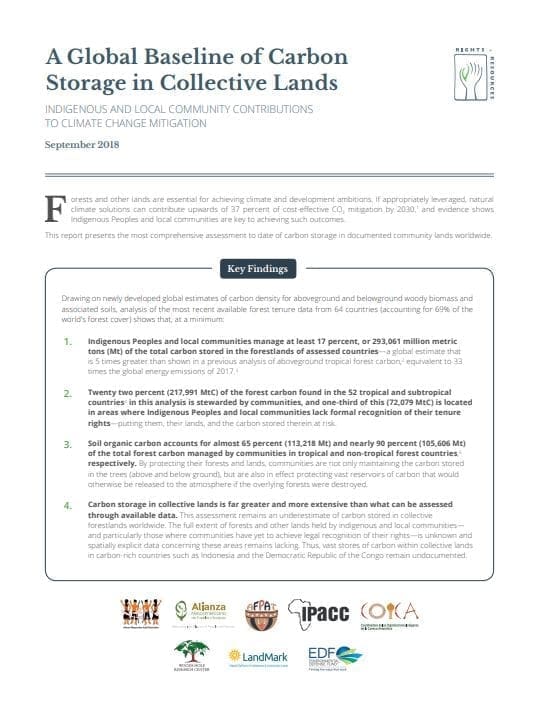
If properly leveraged, natural climate solutions can contribute over 37% of cost-effective CO2 mitigation by 2030. Evidence shows Indigenous Peoples and local communities are key to achieving such outcomes. This report presents the most comprehensive assessment to date of carbon storage in documented community lands worldwide.

At a Crossroads: Consequential Trends in Recognition of Community-Based Forest Tenure from 2002-2017
This analysis reports on trends in global forest tenure from 2002-2017. It is the fourth in a series of analyses monitoring the legal recognition of forest tenure around the world.
This brief presents a review of the nominal progress made in the national-level laws and regulations that govern the carbon trade and define the rights of parties—across a sample of 24 countries in Africa, Asia and Latin America. These countries collectively hold more than 50 percent of global tropical and subtropical forests.
The following reports were produced in 2016-17 as part of the Community Forest Rights Learning & Advocacy Process, with the support of the Rights and Resources Initiative and Oxfam India.
This document provides an empirical picture of the causes and effects of tenure-related disputes between private sector actors and local peoples across Southeast Asia. It…
This report discusses the critical role of Indigenous Peoples and local communities in the context of emerging climate and development priorities, and the unprecedented opportunity to scale up the recognition and protection of community land and resource rights—both for the benefit of rural peoples and for the realization of global peace and prosperity.
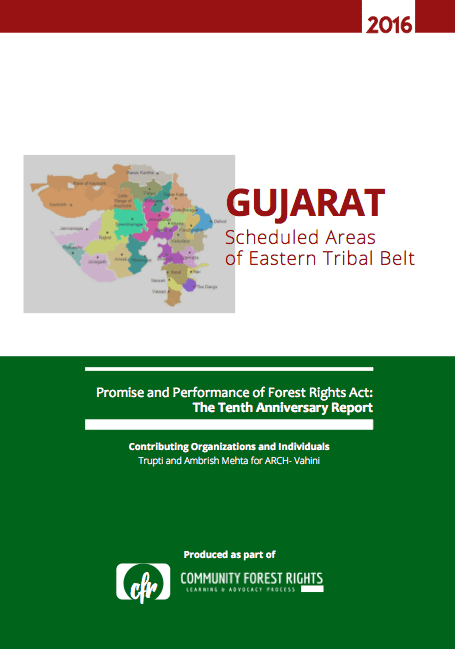
This study gives an approximate estimate of the potential forest areas that can be covered under the FRA in Gujarat. The idea is to compare and assess the actual status of the implementation with regards to the potential. This study also provides an overview of the implementation of the Act, together with highlights of both positive and negative aspects of the process and outcomes.
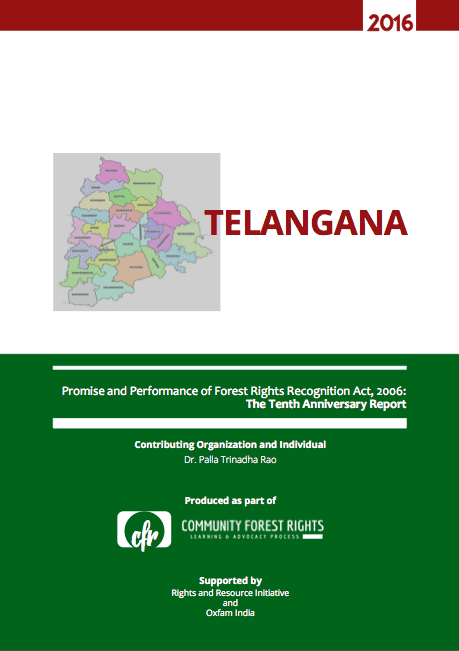
This study makes a preliminary assessment of the potential forest area over which rights can be recognized in Telangana under the FRA and compares it with the actual performance. The estimate provided offers a baseline for informing implementation, planning, and setting targets for rights recognition under the FRA.
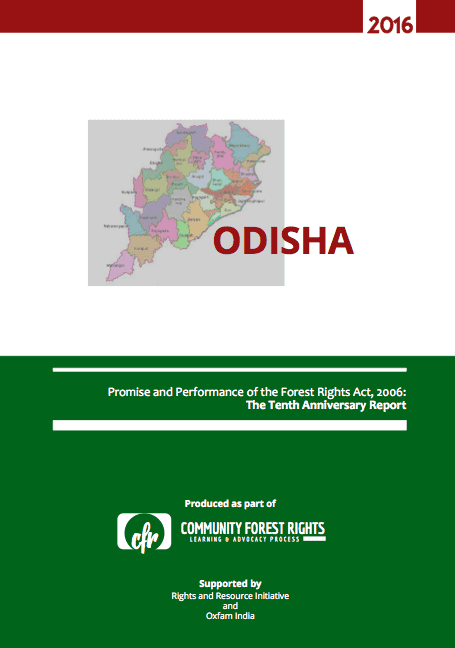
This study makes a preliminary assessment of the potential forest area over which rights can be recognised in Odisha under the FRA. The estimate offers a baseline for informing implementation, planning, and setting targets for rights recognition under the FRA.

This paper proposes a framework of analysis to systematically classify and evaluate legal pathways to secure recognition of community-based property rights.

Amid the realities of major political turbulence, there was growing recognition in 2016 that community land rights are key to ensuring peace and prosperity, economic development, sound investment, and climate change mitigation and adaptation.
The objective of this study is to understand the differences in practice as experienced by the business world compared with the experiences of communities, namely farmer organizations, villagers and indigenous peoples, in securing their rights and maintaining access to lands and forests.
This report highlights FRA’s potential in transforming forest governance by empowering local communities and the gram sabha to protect and conserve forests; ensuring livelihood security and poverty alleviation; securing gender justice; meeting SDG, especially the goals of eliminating poverty and achieving ecological sustainability; and dealing with climate change.
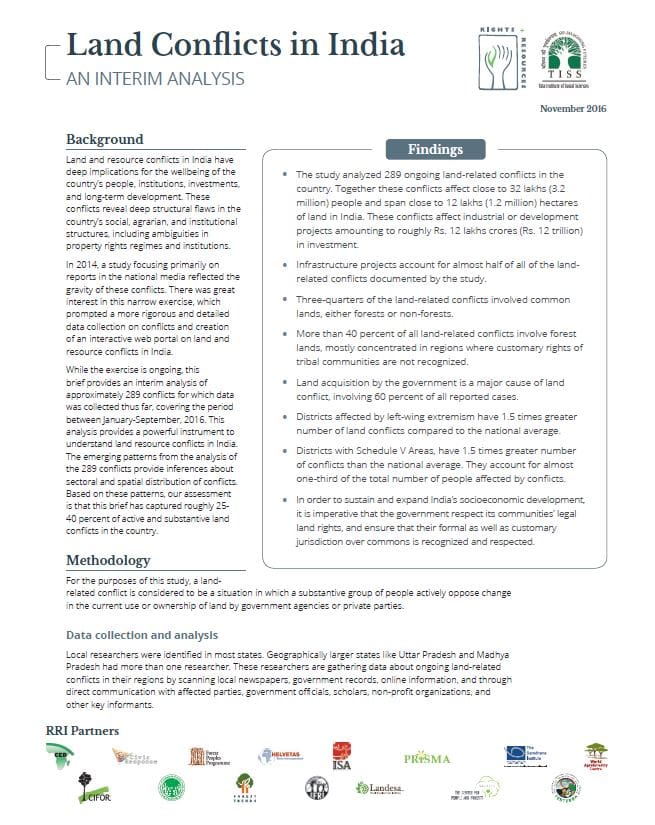
This analysis provides a powerful instrument to understand land resource conflicts in India. Based on the emerging patterns from the analysis of the 289 conflicts, our assessment is that this brief has captured roughly 25- 40 percent of active and substantive land conflicts in the country.
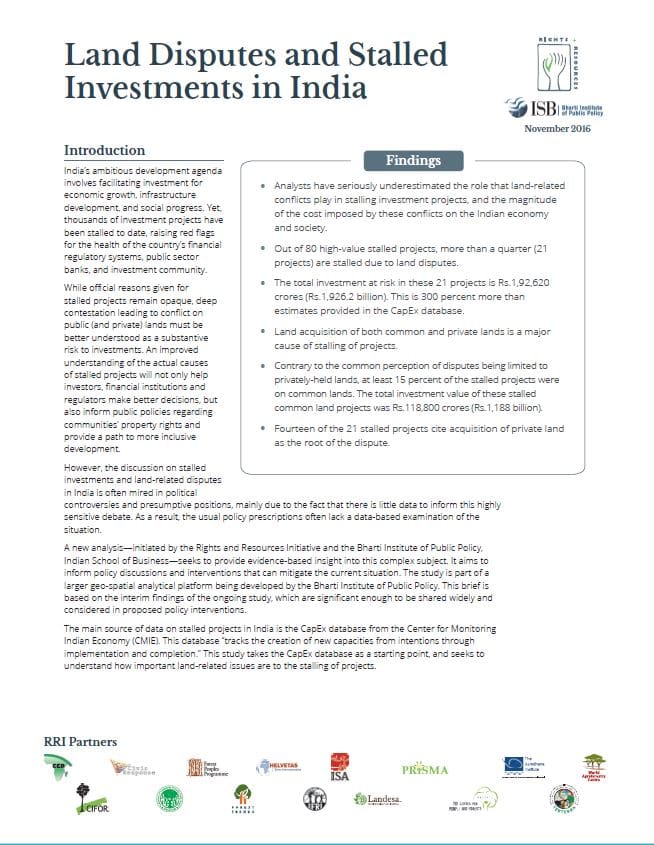
This analysis seeks to provide evidence-based insight into the thousands of investment projects stalled to date in India.