
The objective of this study is to understand the differences in practice as experienced by the business world compared with the experiences of communities, namely farmer organizations, villagers and indigenous peoples, in securing their rights and maintaining access to lands and forests.
This report highlights FRA’s potential in transforming forest governance by empowering local communities and the gram sabha to protect and conserve forests; ensuring livelihood security and poverty alleviation; securing gender justice; meeting SDG, especially the goals of eliminating poverty and achieving ecological sustainability; and dealing with climate change.
Protected areas have the potential of safeguarding the biodiversity for the benefit of all humanity; however, these have also been associated with human rights violations against Indigenous Peoples in many parts of the world.
Just over a decade ago, several forest agency leaders from around the world met in Beijing, China at a conference convened by the Rights and Resources…
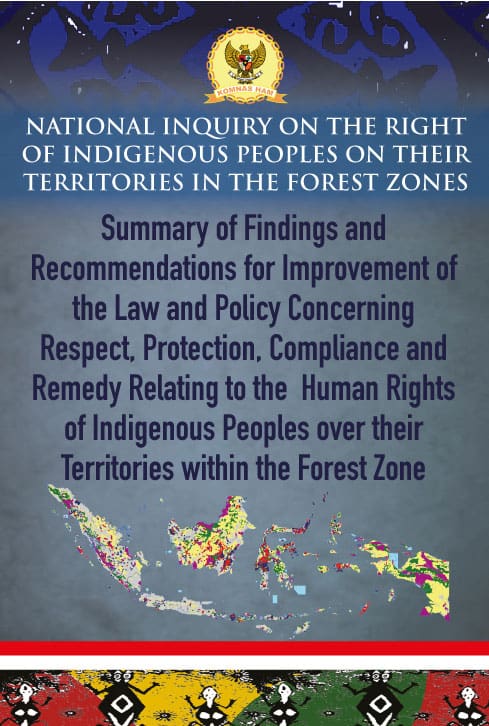
The National Commission on Human Rights (Komnas HAM) has released four books on the “Komnas HAM National Inquiry on the Rights of Customary Law-Abiding Communities Over…
This report explains what tenure risk is and offers objective evidence that the problem is widespread and of increasing frequency, as well as provides highlights from a real-world analysis of over 360 case studies.