A high-level discussion convened by RRI and the FCDO, UK sought to address the ownership gap in collective land rights to tackle climate change and biodiversity loss.
As rising pollution levels, accelerating climate change, and population growth accumulate pressure on the world’s freshwater resources, there has never been a greater need to legally secure the freshwater rights of the Indigenous peoples and local communities who claim and steward over half of the world’s land — including vital watersheds that sustain healthy aquatic and terrestrial ecosystems.
The recent IPCC report was the first to recognize the critical importance of securing indigenous and community land rights as a climate solution.
RRI’s Strategic Analysis and Global Engagement Director Alain Frechette discusses the evidence behind this finding.
The GLF summit presented the first draft of a ‘gold standard’ on rights, which will define the principles of secure and proper rights to be applied by public, private and non-profit actors in the implementation of policies, business and initiatives in global landscape. “We wish to establish that the respect of our rights is non-negotiable,” said Joan Carlin of the Indigenous Peoples Major Group for Sustainable Development (IPMG), which leads the initiative together with the Rights and Resources Initiative (RRI).
RRI is thrilled to be participating in the Women Deliver Conference, the world’s largest conference on gender equality and the well-being of girls and women.
At the recent UN Permanent Forum on Indigenous Issues in New York, six indigenous activists and leaders from across the world took a moment to speak to the often unrecognized and under-appreciated contributions made by their communities for the betterment of society, and to address some of the most widespread and harmful misconceptions about Indigenous Peoples and local communities.
Recognizing and securing women’s land and resource rights—in law and practice—benefits women, their communities, and their countries. Strong governance rights for women underpin their ability to participate in decision-making affecting their personal agency and economic security, their children’s future, and the future of the planet. Just a handful of stories from the RRI Coalition demonstrate how, across the world, indigenous and rural women are fighting for their land and resource rights, and using their traditional knowledge and leadership to contribute to myriad global development goals.
Washington DC-based Rights and Resources Initiative has done a wonderful job of collating dozens of studies that show that indigenous people and other forest-dependent groups have been effective stewards of forests and biodiversity in hundreds of sites throughout the world.
As world leaders gather in Poland this week to hold a critical dialogue on the UN Framework Convention on Climate Change (UNFCCC), the world’s tropical forests ought to take center stage. The ambitious pledge of the Paris Agreement will be virtually unattainable if the world’s remaining tropical forests are not safeguarded.
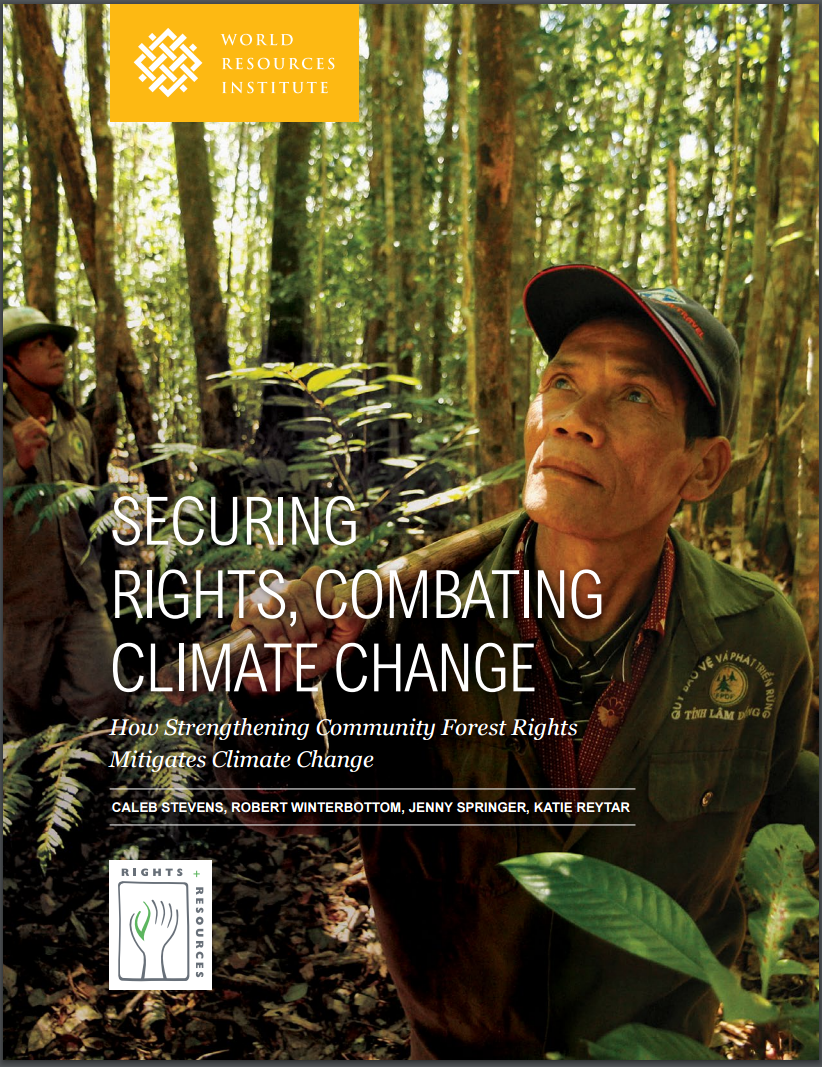
In recent research that analysed contribution of local communities’ contribution to climate change mitigation by looking at carbon storage in collective lands, it was established that communities that claim and own their collective lands have so far sequestered at least 54,546 million tonnes of carbon equivalent — roughly four times the world’s annual emissions. The study, carried out by Rights and Resources Initiative, Woods Hole Research Centre and World Resources Institute, calls for recognition of the world’s indigenous and local communities in climate stabilisation and carbon sequestration.
The theme of this year’s UN Permanent Forum on Indigenous Issues was “Indigenous Peoples’ collective rights to lands, territories, and resources.” Indigenous leaders from across the globe noted the crucial role that secure rights play in their lives and livelihoods, and in the advancement of sustainable development and climate change mitigation.
In a new study released today, researchers say they have identified significant flaws in ambitious forest preservation projects underway in a densely-forested region of the Democratic Republic of the Congo (DRC), where a decision on future investment by the World Bank’s Forest Carbon Partnership Facility (FCPF) is imminent. The DRC province of Mai-Ndombe has been a testing ground for international climate schemes designed to halt forest destruction while benefiting indigenous and other local peoples who depend on forests for their food and incomes, with US$90 million already dispersed or committed for climate finance in the province.
A new analysis of the Democratic Republic of Congo’s Mai-Ndombe province finds REDD+ investments in the region are moving forward without clear recognition of the land rights of Indigenous Peoples and local communities. The findings come at a crucial time, as a decision on future investment by the World Bank’s Forest Carbon Partnership Facility is imminent.
We asked six experts about the biggest opportunities, moments, and potential catalysts for change they see for community land rights in 2018. Here’s what they had to say.
The creation of platforms to acknowledge and address the role of Indigenous Peoples, local communities, and rural women may represent a crucial step toward addressing the disparity between the lands Indigenous Peoples and communities protect and depend on and the legal recognition of their rights. These communities will have a formal platform at future climate talks to exchange knowledge, influence policy, and press for recognition of their rights before world leaders.
Des dirigeants indigènes ont prévenu mardi à Londres que, faute de financement et de mesures supplémentaires pour protéger leurs forêts, la planète n’atteindrait pas les…
Indigenous leaders and forestry experts warned on Tuesday that without more funding and protection for forests and their peoples, the world will fail to meet the ambitious goals set by the Paris Agreement.
Millions of people live in the world’s remaining forests, and evidence is mounting that indigenous communities are not only the best managers of the land, but are indispensable allies in the climate fight.
Inadequate rights for indigenous and rural women are jeopardizing forests and common lands across the globe as demand for land and resources grows.
Community advocates in Brazil, Guatemala, Kenya, Taiwan, and 21 other countries call on governments, private sector to recognise that secure land rights are vital to the global struggle against climate change
A new report authored by the Rights and Resources Initiative (RRI), Woods Hole Research Center (WHRC), and World Resources Institute (WRI) shows that at least…
Days before the RSPO complaints panel was supposed to issue a final judgment on the complaint filed against them, Plantaciones de Pucallpa withdrew from the RSPO.
A new RRI analysis reveals that secure tenure for Indigenous Peoples and local communities—a key climate change mitigation strategy—is notably absent from the Paris Agreement…
Honolulu (AFP) – Some of the world’s leading conservation groups are violating the rights of indigenous people by backing projects that oust them from their…