Blog
“We are no longer the same shy women”: The story of Felisa Navas Pérez, a community leader in Guatemala
By Felisa Navas Pérez, edited by María V. García Vettorazzi and Daiana González

The president and legal representative of the Integral Forestry Association of Cruce a La Colorada (AFICC) in the Maya Biosphere Reserve, Guatemala, shares the vicissitude she had to face as a leader, mother, and head of household.

05 .12. 2025  
5 minutes read
SHARE

My parents were farmers. My father planted corn, and my mother was a seamstress. They emigrated from Baja Verapaz, a department of Guatemala, to San Luis, a town in southern Petén, in the late 1950s. I was born and raised there, and I was the oldest of eight siblings.

I started going to school when I was nine years old. I liked going to school, even though it was three kilometers (about 1.85 miles) from my house. I would stand in front of all my classmates and recite poetry or act and make my classmates laugh. I was at the top of the class two years in a row, but due to my family’s financial constraints, I was only able to go to school up to sixth grade.

I married my husband Mateo at the age of 17, in 1987, to be more precise. We had eight children. He planted corn and beans, and I followed in my mother’s footsteps and dedicated myself to sewing. Mateo bought me a sewing machine, and I was the one who made uniforms for the children in the village.

We lived in San Luis until 1995 and then decided to emigrate to the hamlet of Cruce a La Colorada in the municipality of San Andrés, located in the northern part of Petén. We went in search of land to work—just a small piece of land—after the invitation of my brother, who already lived there.

We thought we could repeat the case of my parents, who obtained their land in San Luis thanks to the agrarian colonization policy that encouraged the migration of many farming families, like ours, to the south of Petén in 1960.

When we arrived, there were more than 30 families, many of whom had lived in the hamlet for more than 10 years. We faced difficulties at the beginning trying to fit in, but we adapted to the local farming community. However, three years after arriving, in 1998, different governmental institutions arrived and informed us that we were within the protected area of the Maya Biosphere and that we could not apply for land ownership or any kind of titling.
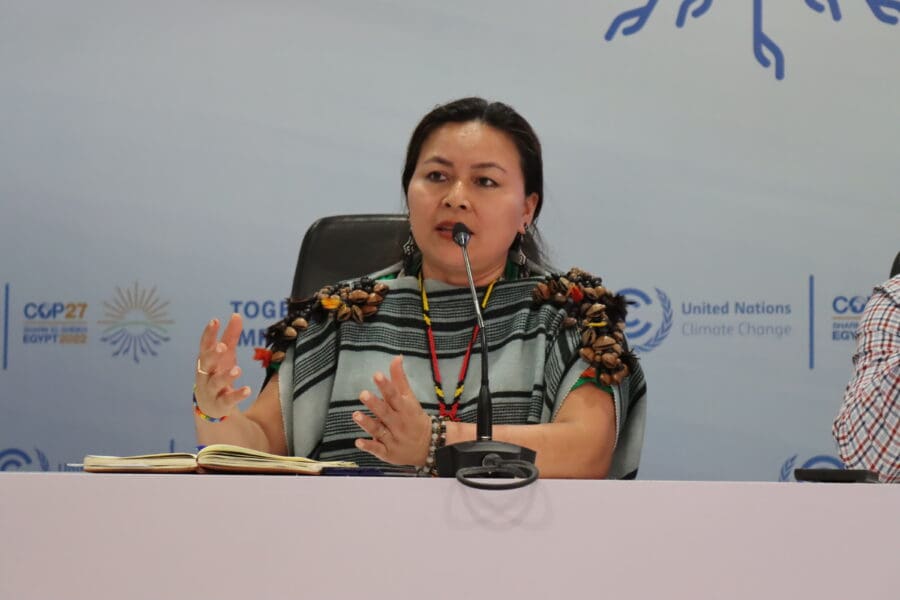
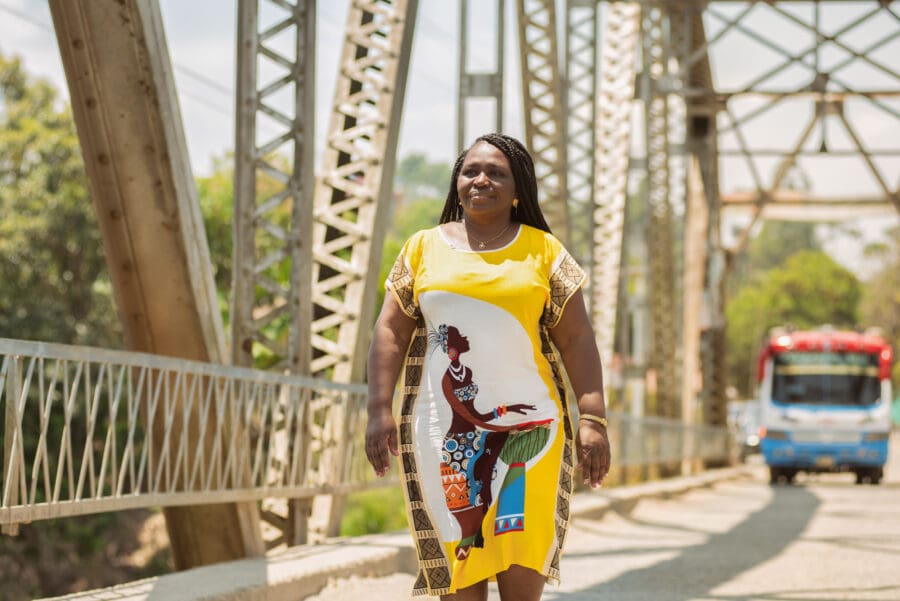
Photo credit: the Integral Forestry Association of El Cruce La Colorada (AFICC)

From farming families to community forestry organizations

Upon hearing this news, the community began to organize. We created the first pro-concession group called the Integral Forestry Association of El Cruce La Colorada (AFICC), which had 23 founding members. My husband was the first treasurer on the group’s board of directors.

In 2000, the first pilot plan for sustainable wood harvesting was carried out under the leadership of AFICC and, onr year later, the concession contract for the La Colorada was signed.

In the meantime, and together with other women, we organized ourselves to actively participate in community meetings and activities. I participated in exchanges of experiences organized by the Association of Forest Communities of Petén (ACOFOP) on gender equality. I would go with my baby in my arms. Even though some men showed resistance, these trainings were valuable for improving the participation of women and men in our community.

We then became members of the association and began to create enterprises: mahogany shell soaps, cutting and sewing, a bakery, and even selling tamales.

The death of my husband and the rebirth in the ashes

When I was 33 years old, my husband died. After his death, I faced great difficulties in supporting my children. I stopped sewing and became a cook in several places. At AFICC, there was an opportunity to go to the camps where timber harvesting was done, so I also went as a cook. Thanks to that, and to scholarships and shared efforts, I managed to support most of my children to complete their basic studies.

The path to community leadership is never linear

Despite having only completed studies up to the sixth grade, I was elected treasurer of AFICC in 2003, then I was appointed secretary in 2010 and finally president in 2011.

When I was elected president, I felt very scared because they had already mentioned men and no one wanted to be encouraged. They named me to participate, and I was silent for a moment, but then I said: “Since they give me the opportunity, I am going to try to be a leader, to see what I can do, to learn, because along the way you learn to do things.” I said, “Okay, I’m going to try. I’ve already gotten on the horse, and I have to see how it’s going to jump. I must hold on,” and I stayed there.

I overcame great challenges during my time as secretary, such as the evictions that the National Council of Protected Areas (CONAP) carried out in 2009 and 2010 here in our community. These evictions left the comrade dead, who was in charge of the Control and Surveillance area.

After the evictions, very few colleagues returned to the meetings; only three women members of the board of directors attended. Despite the lack of support, I persevered. We received training and faced the problems of the association head-on.

Many of those community members evicted in past years wanted to return, and they were looking for us to sign documents and authorize their return. However, it was not our responsibility, but CONAP’s to grant those permits and concessions to the land. This left us with enmities and caused us to receive threats.

The future of women’s leadership in the Maya Biosphere

Being a leader has been a good but difficult experience for me, as I have had to sacrifice time with my family and face multiple responsibilities and challenges, from prolonged meetings to managing resources and paperwork necessary for the operation of the organization.

The truth is that we are no longer the same shy women. Before, one could not even find what to answer, and now, even if it is in our own words, we can talk about the issues. Amid this entire concession process, we have learned a lot. Unfortunately, however, other women do not want to get involved in community organizing yet, despite efforts to motivate them.

I have learned that communication and teamwork are essential to achieving our goals. Even though I didn’t know how to interact at first, I now know that organization and cooperation are key to moving forward, especially in a concession process that has been a school of learning, improving our skills and quality of life through working together.


Interested in receiving notifications about new blog posts? Subscribe to The Land Writes Blog now to get new posts delivered right to your inbox.

Subscribe to this blog
To receive new articles directly in your inbox
Subscribe Now!
Subscribe to the RRI mailing list
to receive new articles directly in your inbox
Subscribe Now!
Subscribe to the Gender Justice Digest
to receive new articles directly in your inbox
Subscribe Now!