Advance a global agenda for rights-based collective livelihoods, community-led conservation, and rural development.



Global Summit on Collective Livelihoods & Conservation

For Rights and Livelihoods
Over the past two decades, Indigenous Peoples, local communities, and Afro-descendant Peoples have secured historic recognition over 17% of the world’s land.
But securing rights is only the beginning.
The Global Summit on Collective Livelihoods & Conservation will bring together rightsholders, governments, philanthropy, and the private and impact investment sectors to ensure tenure rights translate into dignified livelihoods and thriving ecosystems.
LIVELIHOODS & PRINCIPLES
What do we mean by livelihoods?
Far more than income generation, livelihoods refer to the collective systems through which Peoples and communities sustain their well-being, cultures, and self-determination through their lands and territories.
They are expressed through community-led enterprises and initiatives that connect economic activity, cultural identity, and ecosystem stewardship, enabling communities to translate recognized rights into resilient local economies and long-term conservation outcomes.
Livelihoods are rooted in five core principles:
Respect for traditional and Indigenous knowledge systems.
Recognition of collective land and territorial rights.
Recognition of the non-carbon values of nature, including cultural, spiritual, and sacred dimensions
Community-led and self-determined economies
Customary governance institutions are at the center
Event Information
Over the past twenty years, Indigenous Peoples, local communities, and Afro-descendant Peoples have won historic recognition of their collective territorial rights across millions of hectares of forests, grasslands, and coastal ecosystems, reshaping who governs the world’s ecosystems.
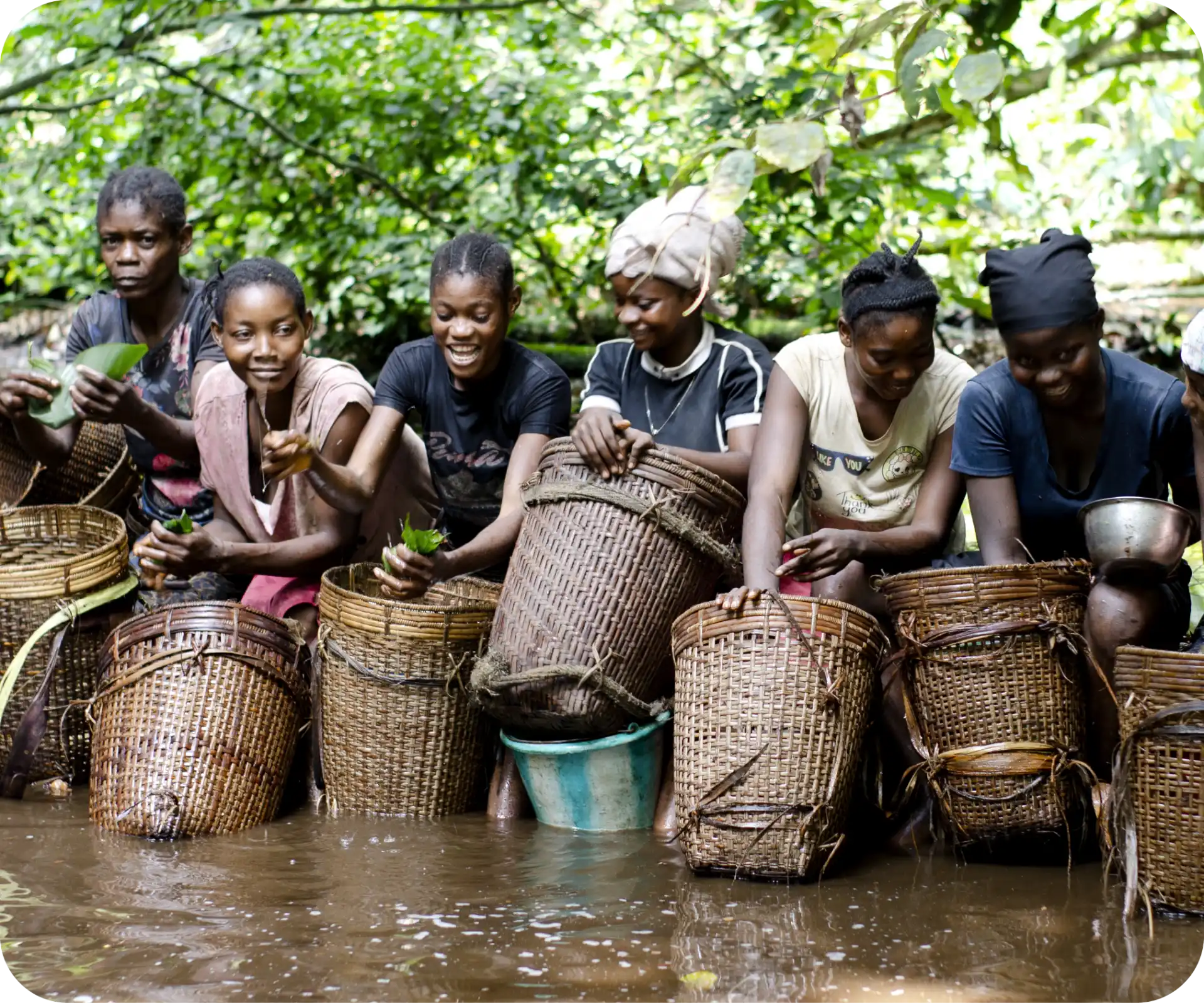
Across these territories, communities are sustaining vibrant economies rooted in stewardship. From agroforestry and forest products to fisheries, cultural industries, and regenerative agriculture, community-led enterprises show that livelihoods, cultural continuity, and ecosystem protection can advance together.
What is missing are the policies, financial pathways, and partnerships needed for these these efforts to thrive at scale.
With renewed global momentum following COP30 in Belém, along with growing urgency to achieve the 30×30 conservation goals and fulfill international political commitments and finance pledges, the opportunity to translate rights into lasting livelihoods has never been greater.
From May 26-29, 2026, RRI, APIB, COIAB, CONAQ, and MIQCB will convene the Global Summit on Collective Livelihoods & Conservation in Brasilia, Brazil.
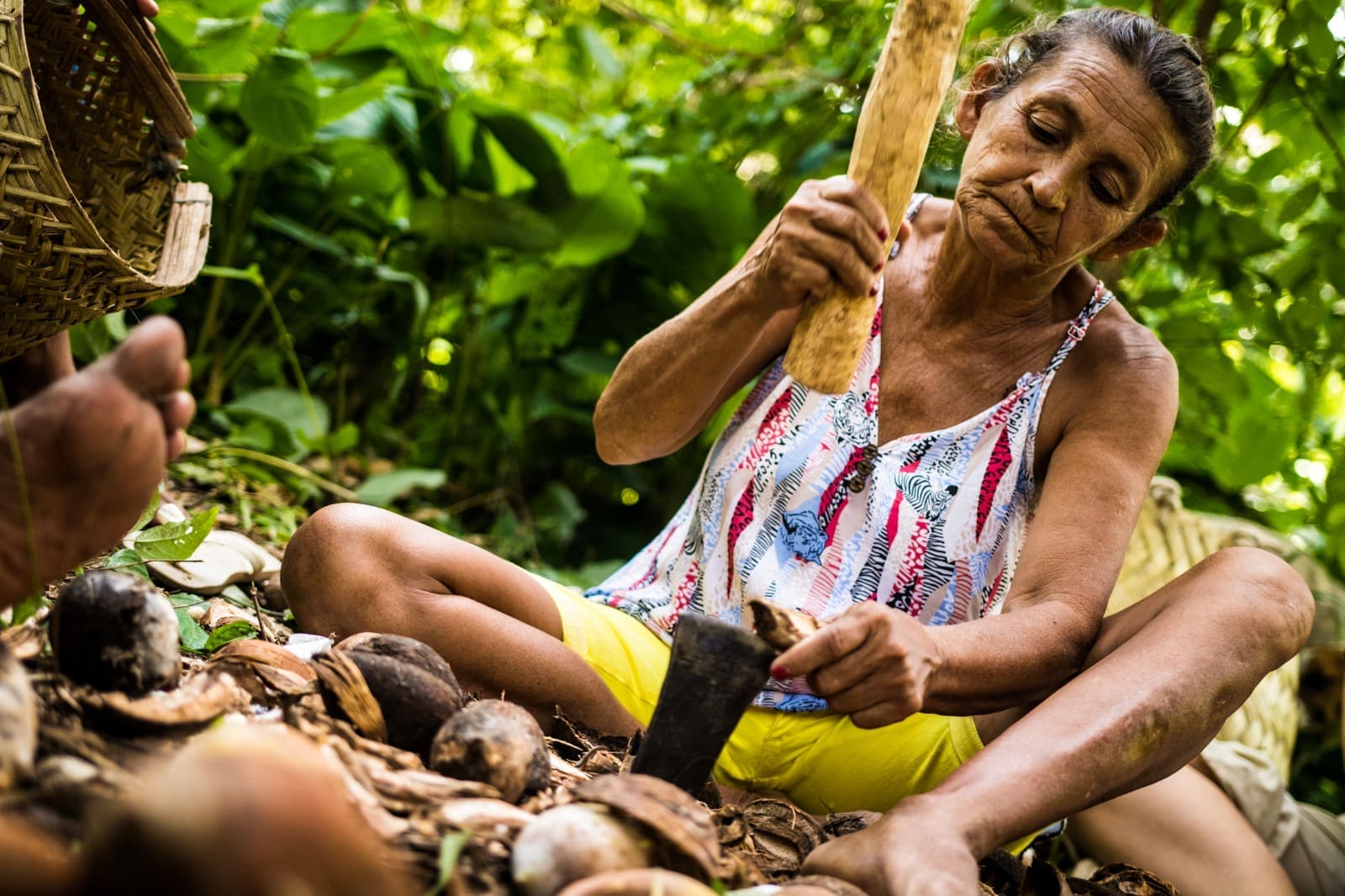
Bringing together rightsholders, governments, philanthropy, and leaders from the private and impact investment sectors, the Summit will elevate collective livelihoods as a cornerstone of climate action, biodiversity conservation, and equitable development.
This will be an unprecedented space for alignment, learning, and leveraging political momentum toward real and inclusive implementation ahead of the upcoming 2026 Rio Conventions: UNCCD COP17, CBD COP17, and UNFCCC COP31.
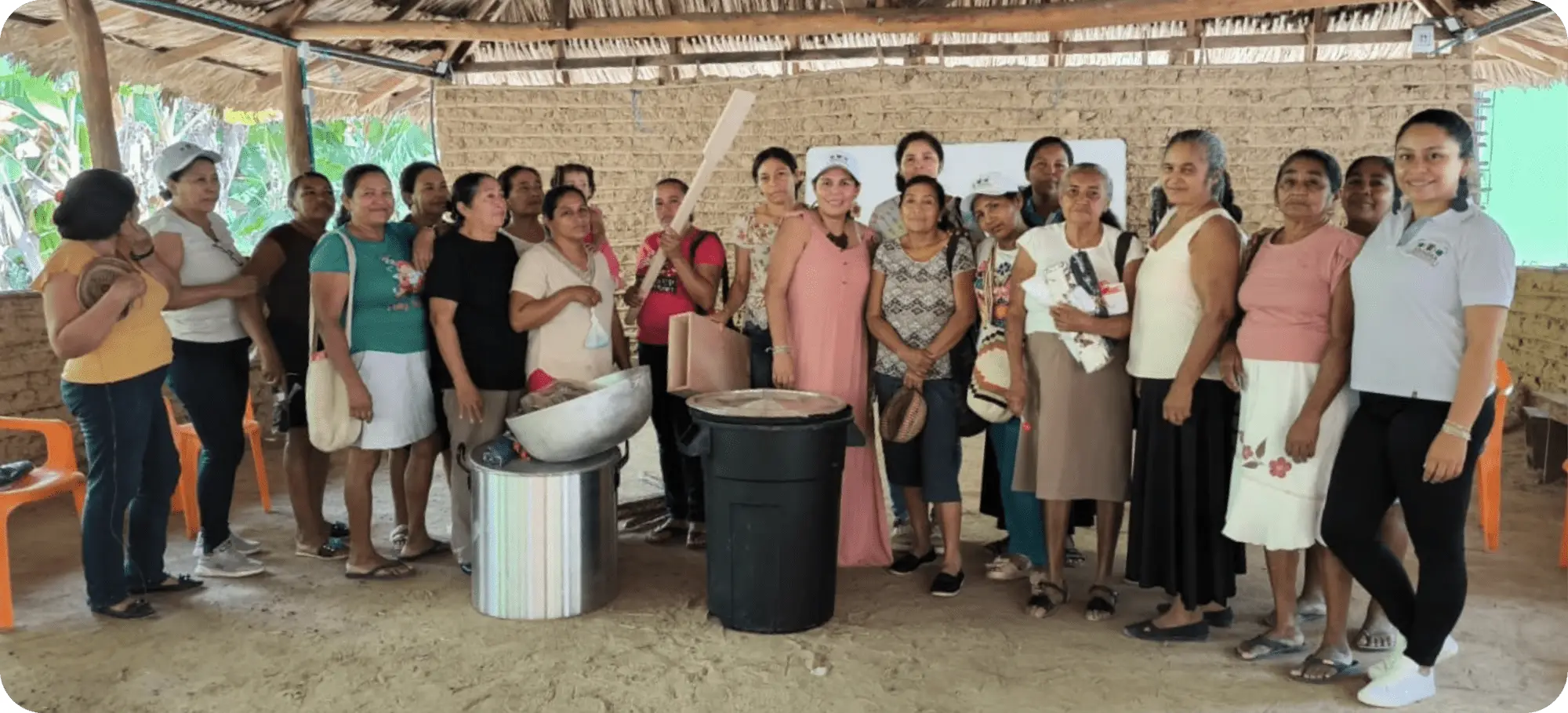
The summit is by invitation only.
Purpose
The summit will focus on the much-needed systems change to enable community-led economies to thrive at scale.
Catalyze systemic reforms in policy, finance, markets, and governance to enable livelihoods at scale.
Strengthen rightsholder leadership and collaboration through cross-regional learning and partnerships.
Event Details
Agenda
Opening, Political Context & Foundations: Centering Livelihoods and Community Economies
Explore the agenda in all languages here.
RRI Case Studies
How our coalition is supporting livelihoods around the world.
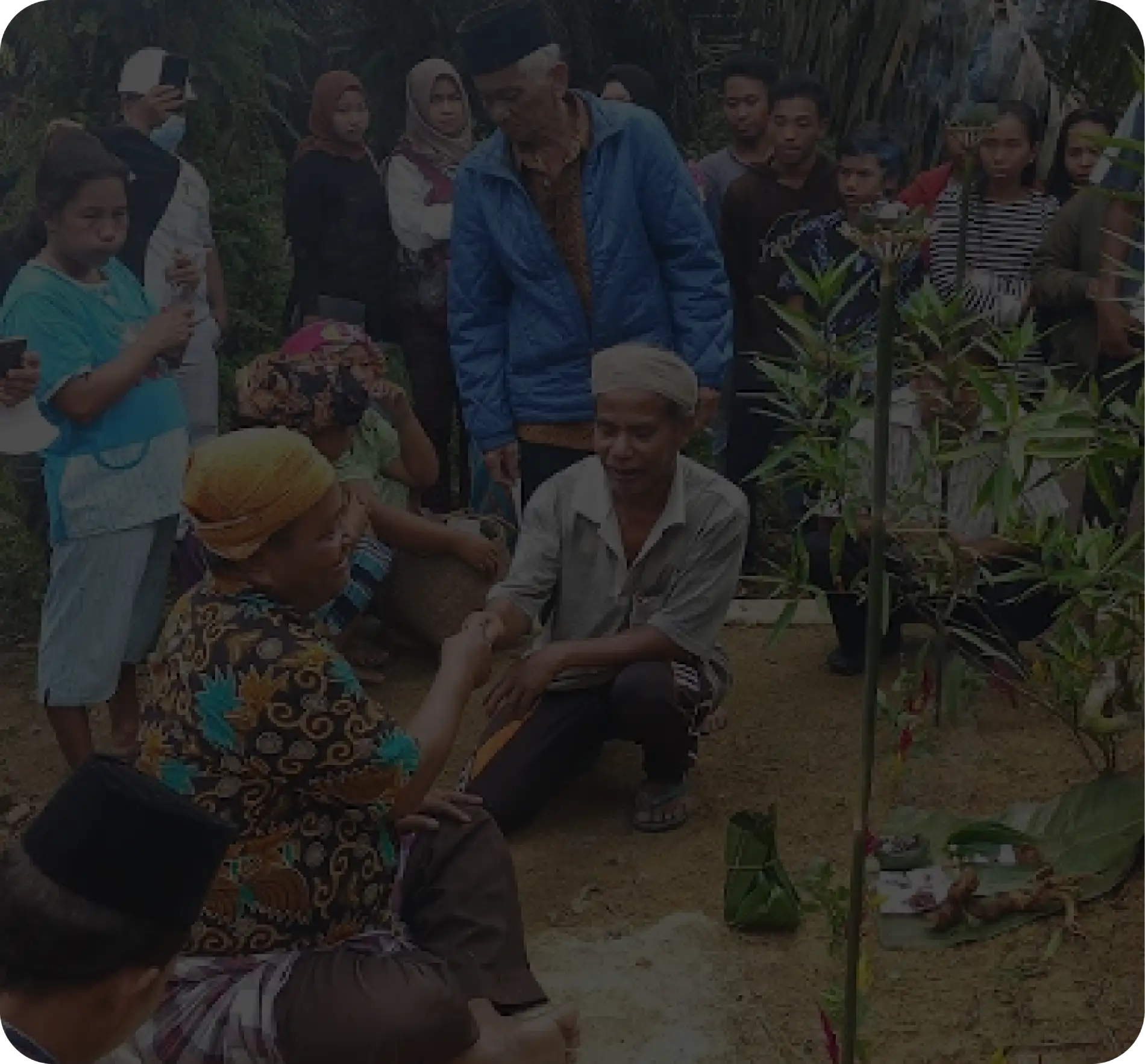
Talang Parit
Community
Indonesia
Using the RSPO complaints system to reclaim 300–500 hectares of palm oil plantations, restoring land rights and local livelihoods.
The Talang Parit Indigenous community in Indonesia successfully used the RSPO complaints system to reclaim their customary land from a Samsung-linked palm oil company, culminating in a 2025 decision affirming their rights. As a result, the community is set to regain 300–500 hectares of productive palm oil gardens, valued at roughly USD 30,000 each 2-hectare plot, alongside a smallholder rejuvenation program, marking a major step forward in restoring livelihoods, strengthening local economies, and demonstrating how rights-based advocacy can translate into tangible community prosperity.
Thatu and Kumal
Tribes
Nepal
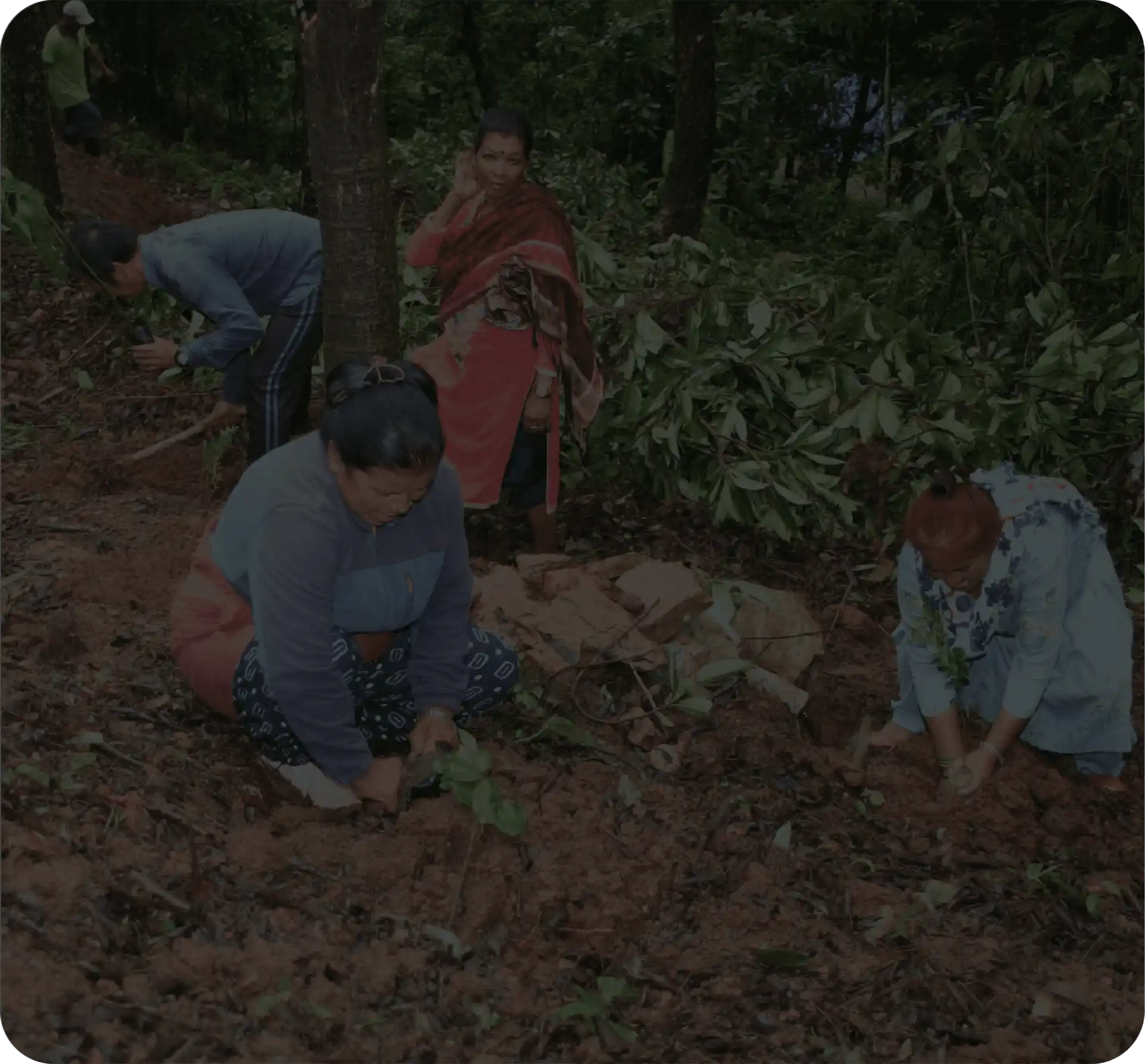
Restoring degraded land and generating income by planting lime trees using traditional farming knowledge.
Community women from Tharu and Kumal tribes in Nepal restored degraded farmland and generated income by planting lime trees during the COVID-19 lockdown. These women displayed economic resilience by using traditional farming knowledge to simultaneously sustain their communities’ livelihoods and land.
Goudévé and
Kponvié
Communities
Tog
Securing over 1,000 hectares of land and strengthened livelihoods through collective land governance and agroforestry.
The communities of Goudévé and Kponvié came together to secure their land while strengthening everyday livelihoods. In the face of land insecurity and climate pressures, they chose collective action, organizing peacefully to manage and protect more than 1,000 hectares of land vital for farming, food security, and future income. Building on this foundation, communities jointly adopted agroforestry and local composting practices. Farmers, particularly women and youth, began integrating fruit trees into their fields and replacing expensive chemical fertilizers with compost made from local resources, reducing production costs, improving soil fertility, and opening new income opportunities.
La Coalition des Femmes
Leaders pour l’Environnement
et le Développement Durable
DRC
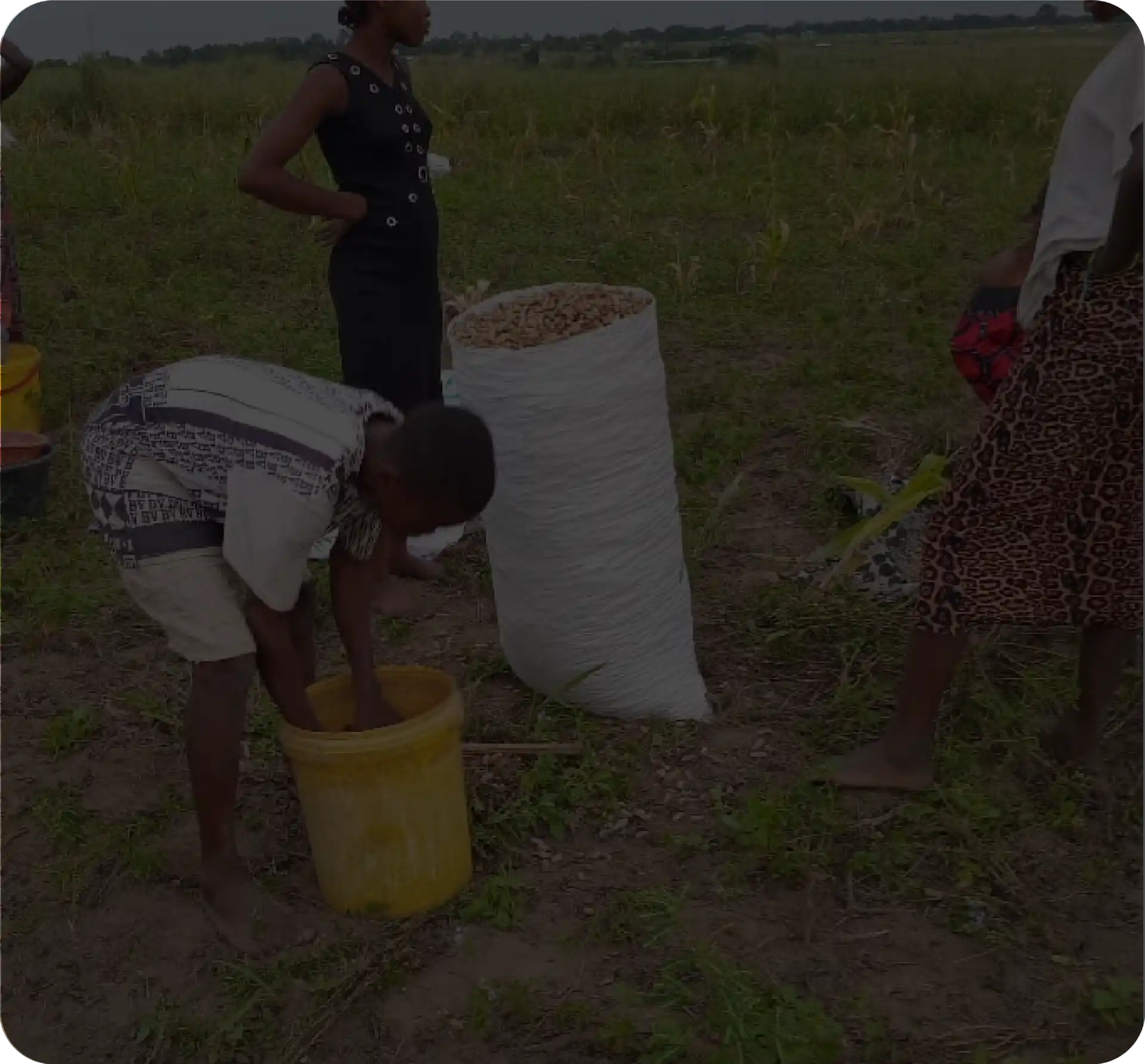
Strengthening livelihoods and climate resilience through agroecology, sustainable forest use, and local ecological enterprises.
Women and youth in five provinces of the DRC were supported to strengthen livelihoods by building on local and Indigenous knowledge as a response to climate change. Women-led organizations documented and applied nature-based practices, such as agroecology, agroforestry, organic soil management, and sustainable use of forest resources, that are already part of community life. Through participatory learning and youth apprenticeship programs, communities developed ecological briquette production, organic agricultural inputs, and climate-resilient farming activities. These initiatives reduced production costs, improved food security, created income opportunities, and reinforced women’s leadership in local land and climate governance.
ASOARKA –
Kankuamo
People
Colombia
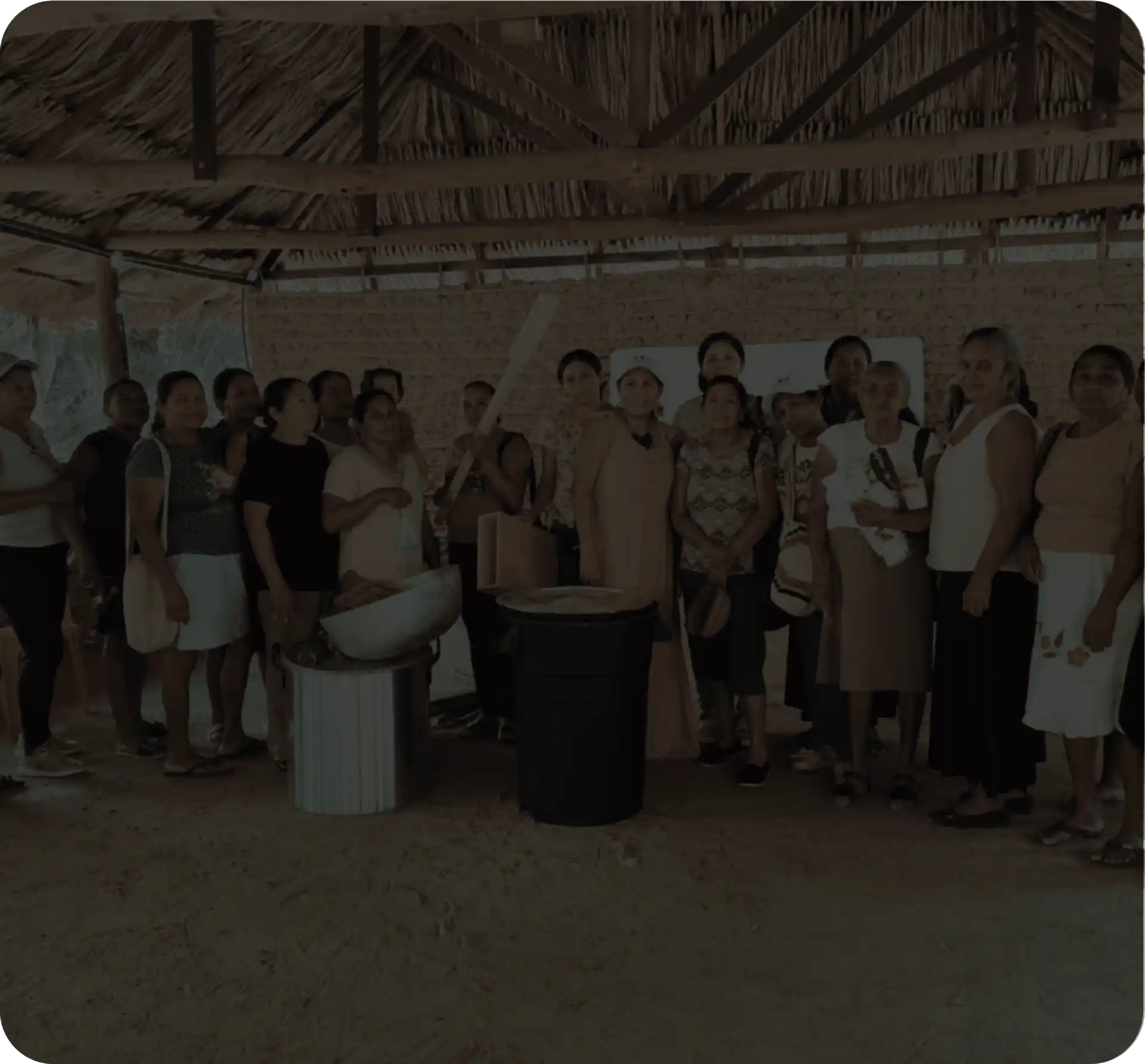
Sustaining livelihoods and preserve culture through traditional fique handicraft production.
ASOARKA represents 212 Indigenous women from the Kankuamo reservation of the Sierra Nevada de Santa Marta in Colombia. They’ve created fique handicrafts since 1993 to promote the preservation of cultural practices and respond to the lack of employment of Kankuama women. The woven fabrics have been their tool of economic resistance during the armed conflict. Rose Montero, a member of ASOARKA, said: “The participation and empowerment of women in other scenarios, transmitting knowledge to children and young people, has also allowed us to relate to other productive experiences, carry out exchange processes, and learn about them. It has also made us aware of organic production and environmental management.”
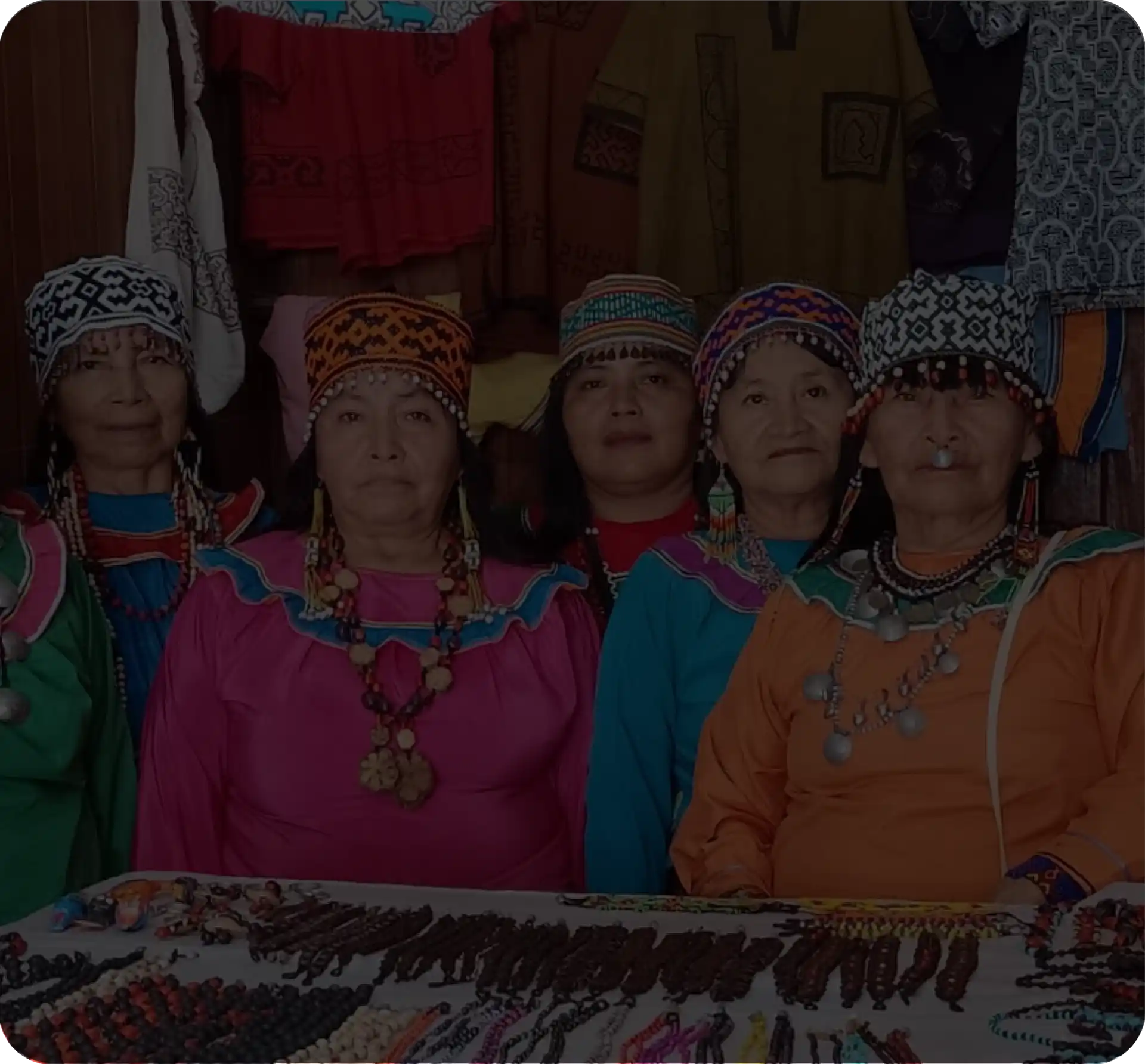
Association of
Maroti Shobo
Artisans
Shipibo-Konibo People, Peru
Maintaining livelihoods and cultural heritage through the production of traditional Kené-design handicrafts.
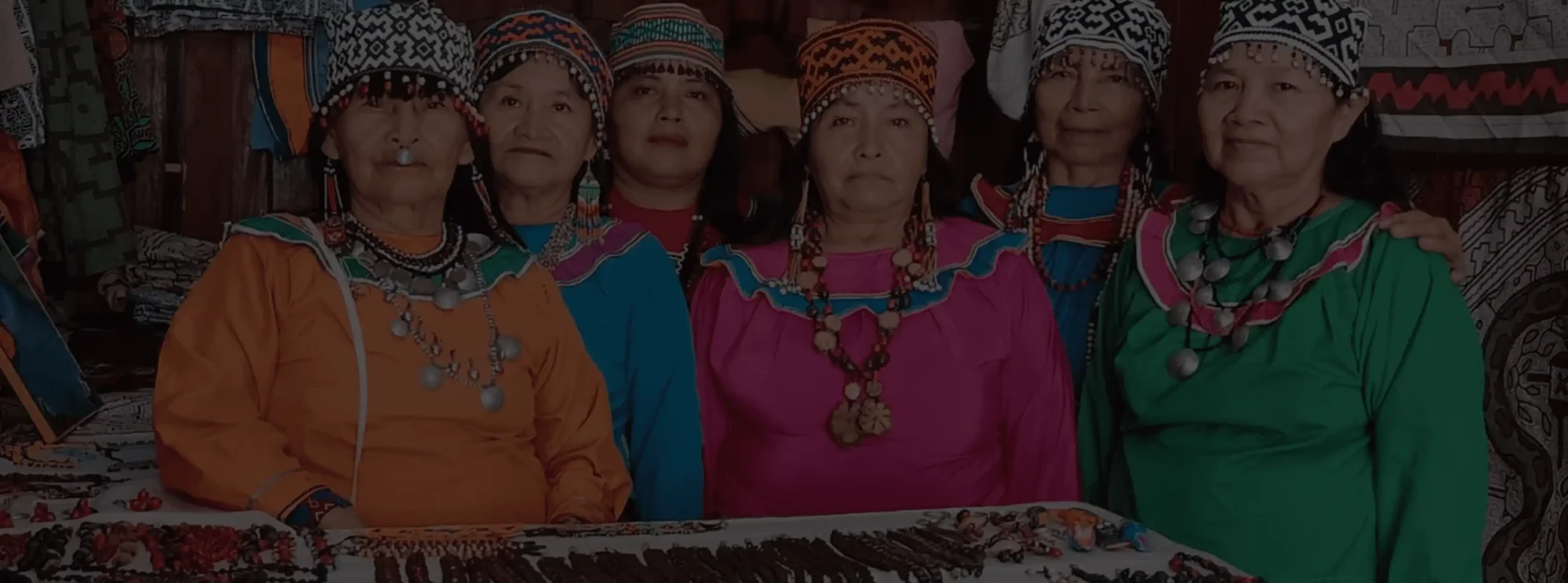
Made up of members of the Shipibo-Konibo people in the Amazon region of Peru, the community creates and sells products that strongly connect to the ancestral roots, customs, and languages, such as the production of handicrafts using one of their ancestral design systems called Kené, which was declared as National Cultural Heritage in 2008. Maroti Shobo, which means “sales house” (casa de ventas, in Spanish), has been a known name in the Peruvian handicraft world for more than 50 years, but it was in 2003 when three women artisans decided to restructure the Association to take it out of inadequate management and create an organization mainly integrated by women. From that day on, 24 Indigenous women partners keep running their shop, which opens every week in Plaza de Armas in Yaricocha.
Reports
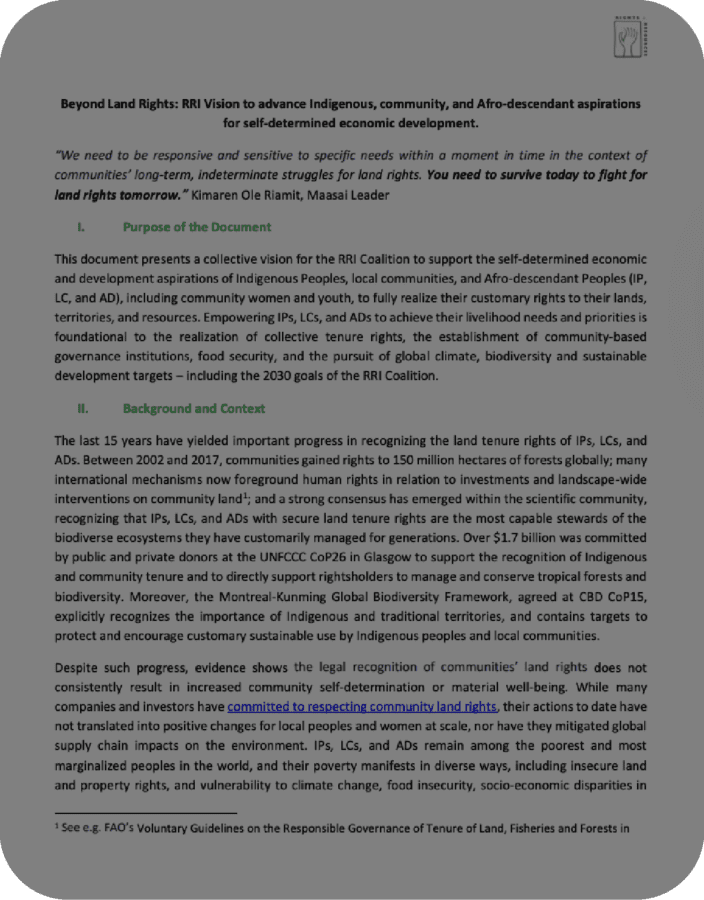
Beyond Land Rights: RRI Vision to advance Indigenous, community, and Afro-descendant aspirations for self-determined economic development.
Principles of Community Monitoring
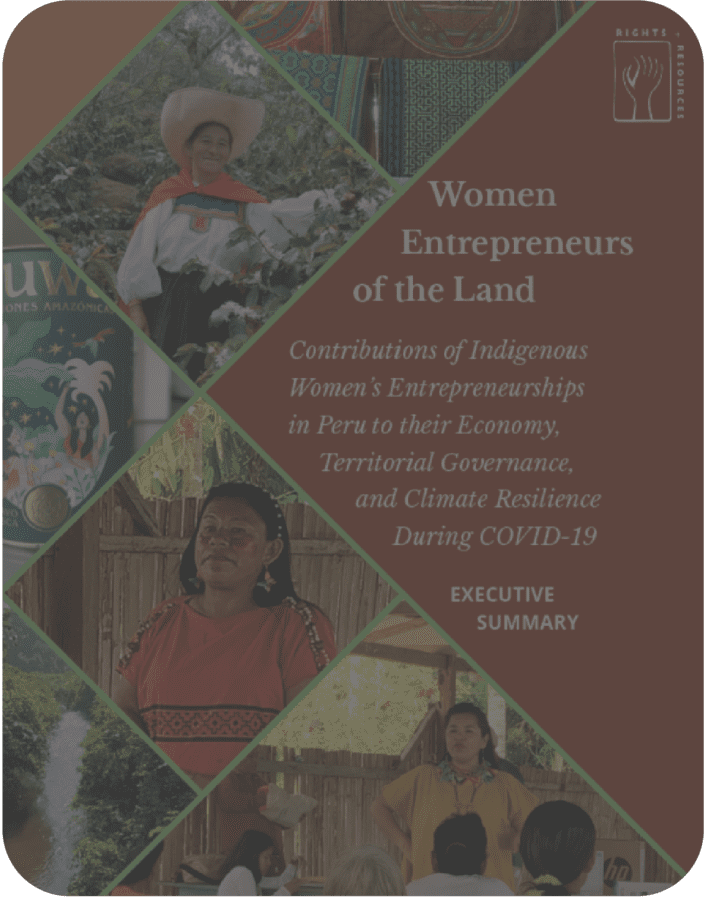
Indigenous Women Entrepreneurs’ Contributions to Peru’s Economy, Territorial Governance, and Climate Resilience
Contact Us
- For general inquiries, please contact Bryson Ogden, Rights and Livelihoods Program Director at [email protected]
- For press and media, please contact Madiha Waris, Strategic Communications Director at [email protected]
Co-organized by:
In partnership with