
Sustaining Resilient Pathways is the first thematic analysis of how international funding supports the interconnected dimensions of tenure security. Drawing on data from the Path to Scale Funding Dashboard, the brief examines not only how much funding is being mobilized, but how it is distributed across five thematic areas: territorial recognition, implementation of existing rights, policy reform, livelihoods, and organizational strengthening.
This report represents two decades of working together across continents, cultures, and movements to build a more just and sustainable planet for Indigenous Peoples, local communities, and Afro-descendant Peoples—particularly the women and youth within them.
From August 19–22, 2024, public forest agency leaders within the MegaFlorestais network from some of the world's most forested countries met in the state of Pará in northcentral Brazil. They gathered to learn about ongoing forest management programs, progress and challenges of elevating the role of community-led conservation, preventing forest loss, and promoting restoration and reforestation around the world.
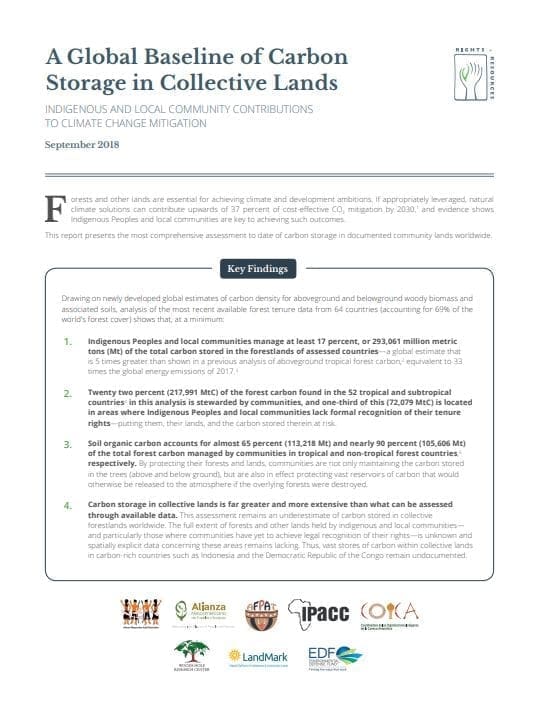
If properly leveraged, natural climate solutions can contribute over 37% of cost-effective CO2 mitigation by 2030. Evidence shows Indigenous Peoples and local communities are key to achieving such outcomes. This report presents the most comprehensive assessment to date of carbon storage in documented community lands worldwide.

At a Crossroads: Consequential Trends in Recognition of Community-Based Forest Tenure from 2002-2017
This analysis reports on trends in global forest tenure from 2002-2017. It is the fourth in a series of analyses monitoring the legal recognition of forest tenure around the world.