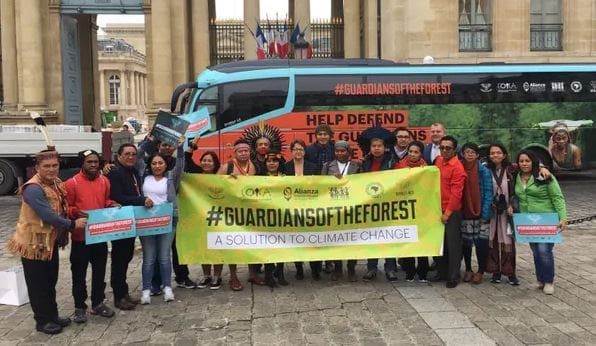
For generations, Indigenous Peoples and local communities have been primary stewards of Africa’s biodiversity; protecting forests, sustaining wildlife and maintaining traditional governance systems through sustainable agriculture and the protection of historical sites. Yet, they remain legally disenfranchised from their ancestral lands and resources, often forcibly displaced to make way for national parks, forest reserves, and other protected areas.
A new report from RRI assessing 27 community conservation cases across 23 African countries shows that community-led conservation is already delivering meaningful benefits for people and nature — from sustainable agriculture and wildlife management to social mobilization within communities.
The report also identifies the legal and policy reforms still needed to build strong tenure systems and financing models, and calls for advancing rights‑based, and community‑led conservation by investing in sustainable community livelihoods.
Scale and Influence
Across Africa, Indigenous and local community organizations are mobilizing for change in conservation models, rejecting new state-protected areas on their customary lands. Their advocacy has led to hard-won gains: key global biodiversity commitments now require states to recognize their rights in conservation practices. In particular, the Kunming-Montréal Global Biodiversity Framework (KMGBF), adopted in 2022, marked a turning point by reinforcing states’ obligations to respect communities’ land and resource rights.
“History tells us [that since] time immemorial we have been here. The biodiversity of this land is who we are. We do not want to be rich. We want to be kind to our animals. We want to be respectful of our vegetation”. The environment is the pride of our people.”
– Cosmas Murunga, an Ogiek elder, Kenya
The scale of community governance in Africa is significant. The report shows that nearly 78% of Africa’s land area is held and managed by communities under customary tenure, and more than 80 percent of the continent’s biodiversity lies outside formal state-protected area systems. 84% of the remaining wildlife in Sub-Saharan Africa is also in natural forests and rangelands outside the formal protected area system where people live with and depend on biodiversity.
Africa’s biodiversity survives largely because communities protect it; not because of state conservation systems.
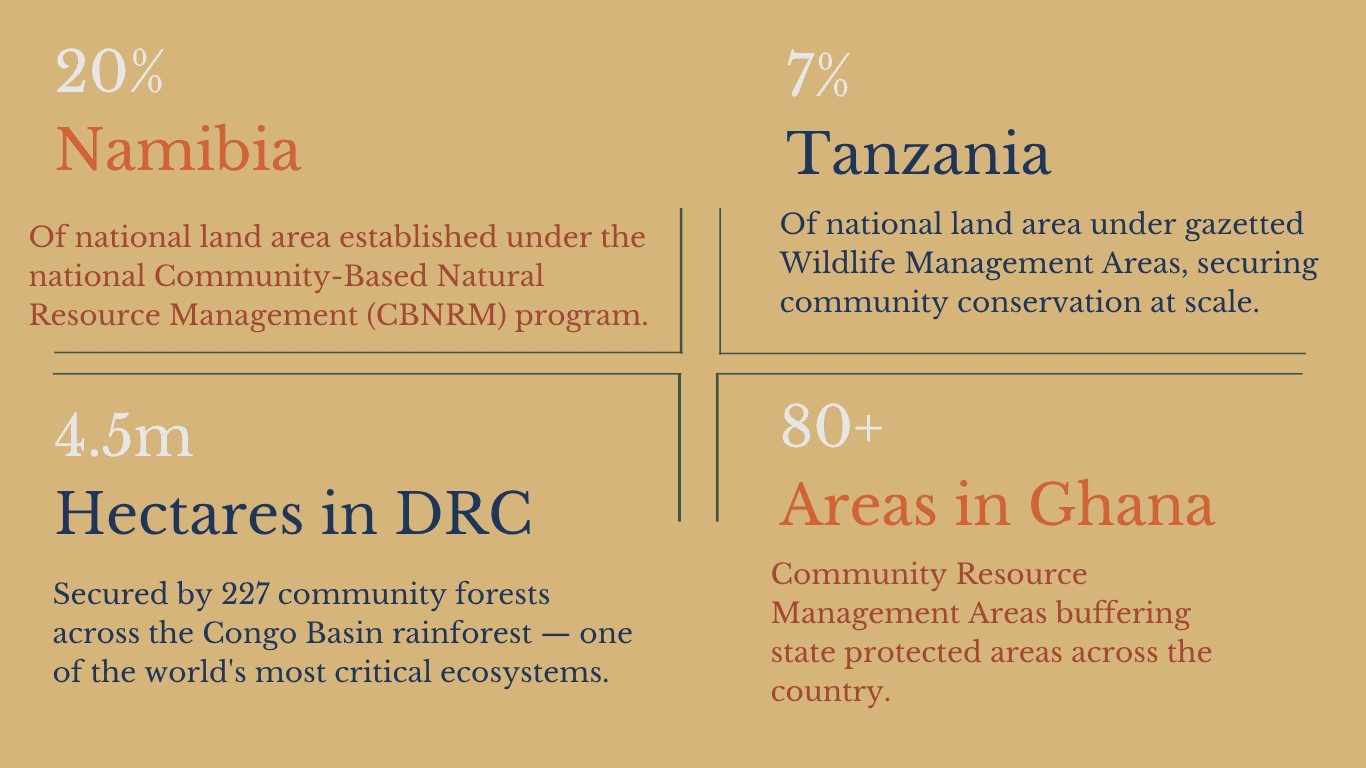
Yet state-led conservation models continue to dominate, often limiting community authority. Lands formally “owned” by Indigenous Peoples and local communities are mostly located in only five countries. For example, Kenya’s Community Land Act (2016) provides a legal pathway for pastoralist and Mobile-Peoples to formally own and manage conservation areas. However, in other countries like Namibia, conservancies hold rights to wildlife but not the underlying land, leaving them vulnerable to encroachment.
The report calls on countries to align their National Biodiversity Strategy and Action Plan (NBSAPs) with a rights-based approach that respects Indigenous Peoples and local communities’ land rights, traditional values, and governance systems.
Benefits of Community-Led Conservation
Long before colonization, rural communities across Africa shaped biodiversity through governance systems rooted in biocultural practices. These practices remain active today.
For example, sacred forests such as the kaya forests in Kenya are tied to ancestral spirits where cutting down trees for any purpose is forbidden. Monkeys and chimpanzees are protected species in parts of Ghana and the Democratic Republic of the Congo (DRC), and the Maasai of Kenya and Tanzania have enclosed areas called alalilis for forage to grow untouched during the rainy season; used as reserves for weak or young livestock in the dry season.
These customary practices have long served to protect wildlife species and conserve nature, demonstrating their impact on national conservation and biodiversity.
“We have scientific proof that communities at the local level conserve biodiversity better than governments and NGOs combined. Why? Because conservation for communities is not a separate activity. For communities, conservation is life.”
– Patrick Kipalu, Director, Africa Program, Rights and Resources Initiative
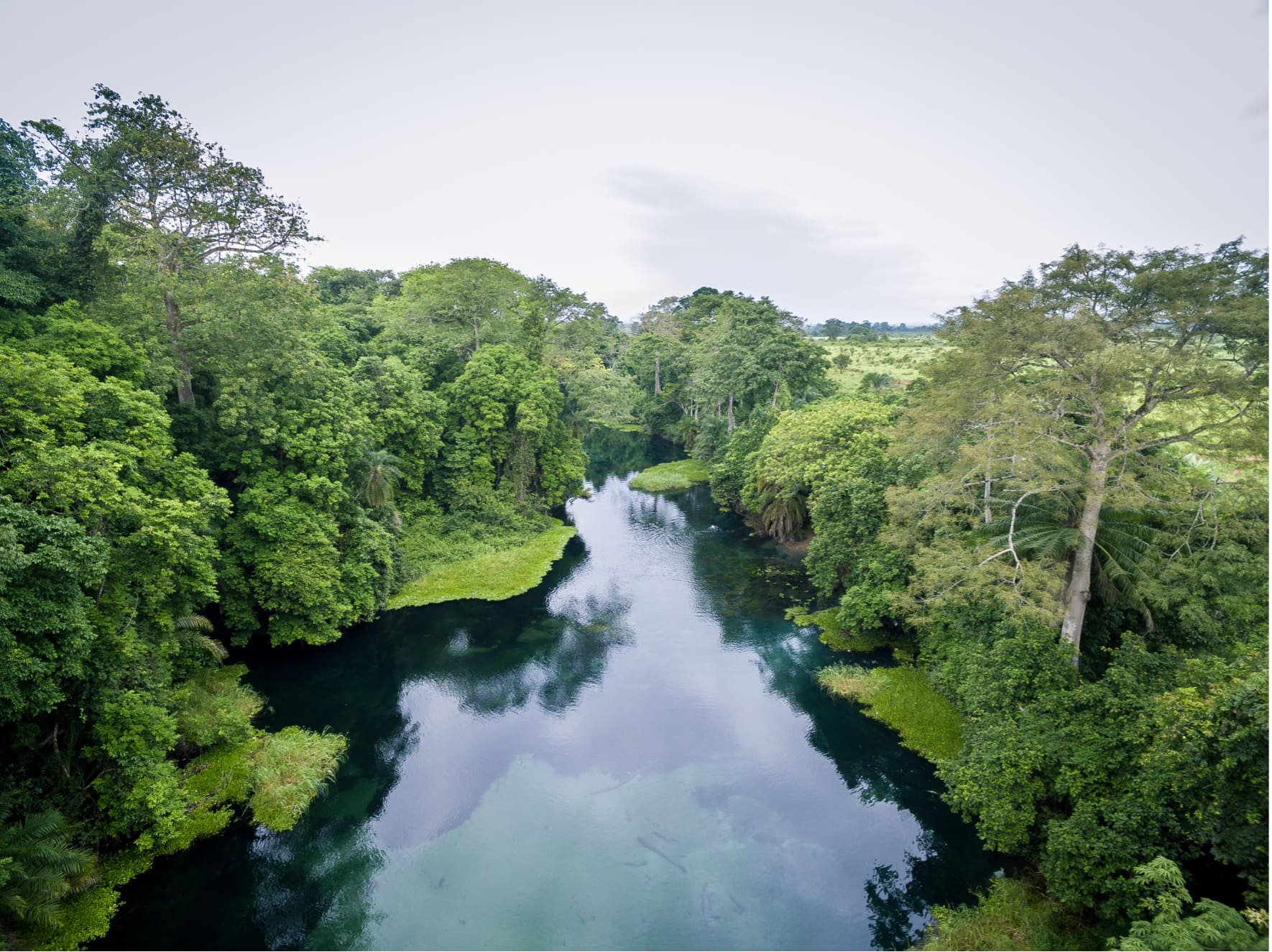
Community-led conservation also generates tangible economic benefits through direct use, tourism, and employment for both individual households and wider communities. In Kenya alone, conservancies host 142 ecotourism facilities reaching more than 700,000 households.
However, these benefits vary widely across regions, and governments may often claim a large share of revenue before it reaches communities. In Namibia, where communities receive 100 percent of revenues from the management of wildlife in conservancies, incentives for community conservation are far greater than in Tanzania, where the government keeps 35 percent.
For community-led conservation to flourish, communities must benefit economically from their lands and resources and be able to sustain themselves. The report calls for addressing power imbalances between communities and investors so that revenue from community conservation directly reaches Indigenous Peoples and local communities, strengthening both their livelihoods and governance authority.
Strong governance also includes the participation of women, who hold vast knowledge of biodiversity but are often excluded from decision-making, particularly in West and Central Africa. Organizations such as the African Women’s Network for Community Forest Management (REFACOF) are advocating for gender-equitable reforms that include women and youths’ distinct knowledge and experiences in community governance and ensures benefits are broadly and equitably shared.
“Women’s land rights are very important because they are the ones who feed the family. Women produce the food, they care for the children, they farm. Land is their main factor of production, and everything depends on it.”
– Cécile Ndjebet, founder and director of REFACOF, Cameroon
Call to action
To deliver on global biodiversity commitments like the Kunming-Montreal Global Biodiversity Framework (KMGBF), the report calls on African countries to ensure the direct participation of Indigenous Peoples and local communities in national conservation planning and in any decisions that affect their lands and resources. Some of its recommendations include:
- Devolve genuine decision-making authority to communities’ customary institutions to undertake land and resource management activities without burdensome state interference.Implement existing community tenure and conservation laws to ensure that opportunities provided in national legislation are realized on the ground.
- Ensure that countries’ national biodiversity strategies and Biodiversity Financing Plans are developed with the full and effective community participation, including community-led conservation as a national target.
- Channel direct funding to communities to support their conservation and climate mitigation projects.
- Ensure robust inclusion of women and youth in community governance by integrating their distinct knowledge and priorities in community decision-making on conservation.
For a detailed list of the report’s recommendations and calls to action, explore the full report here.